
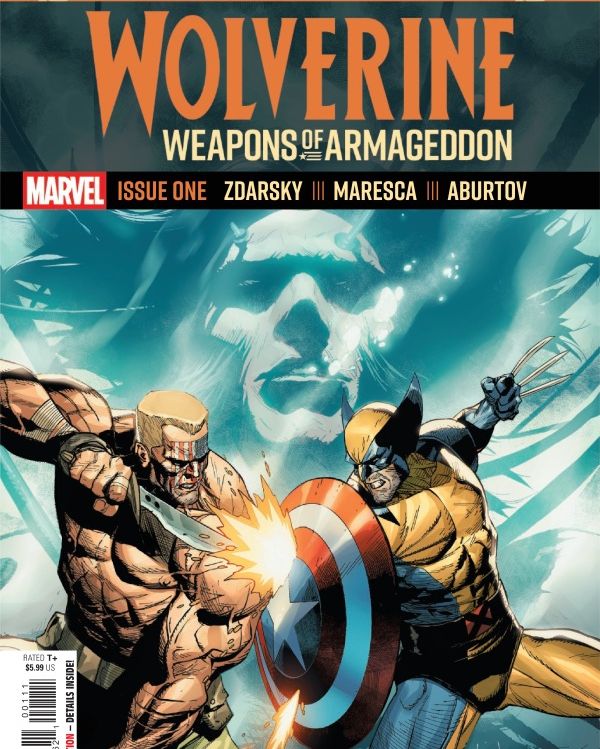
- Written by: Chip Zdarsky
- Art by: Luca Maresca
- Colors by: Jesus Aburtov
- Letters by: VC’s Joe Sabino
- Cover art by: Leinil Francis Yu, Romulo Fajardo Jr. (cover A)
- Cover price: $5.99
- Release date: February 18, 2026
Wolverine: Weapons of Armageddon #1 (Marvel, 2/18/26): Writer Chip Zdarsky and artist Luca Maresca deliberately stage Wolverine in a grim super soldier hunt driven by a mysterious Origin Box from the Ultimate Universe, sliding the story into tense investigation mode. The execution is solid yet talkatively uneven, with sharp character beats buried under thick exposition; Verdict: For die-hard fans only.
First Impressions
This issue immediately presents itself as a serious, confidently plotted Wolverine thriller that leans hard into trauma, clandestine programs, and shadowy corporations rather than splashy superhero spectacle. The script smartly foregrounds Logan’s history with Weapon X and other covert outfits, so every conversation feels loaded with regret and suspicion, even if the heavy dialogue gradually slows the tension that the premise promises.
As the story unfolds, the dense, steadily paced conversations about missing soldiers, Origin Boxes, and murky government ties start to feel like homework instead of a rush, even though individual lines land cleanly and reveal character. The net effect is a comic that feels respectably crafted and thematically pointed, yet oddly sedate for a launch issue that is supposed to ignite something called Armageddon.
Plot Analysis (SPOILERS)
The issue opens by firmly re-establishing Wolverine’s long, weaponized past, spotlighting his mutant healing factor, enhanced senses, and the brutal history with Weapon X that turned his skeleton and claws into adamantium tools for other people’s wars. From there, Logan is drawn into a fresh investigation when an old acquaintance connects him to a disturbing new super soldier program, one that is already abducting mutant subjects instead of recruiting volunteers. The mysterious PRIMEWARRIOR corporation emerges as the chief antagonist in the background, quietly inheriting Weapon X’s worst instincts while the narrative stresses that their methods are every bit as cold and calculated.
As Logan tracks leads, the script carefully folds in the Armageddon angle by revealing that Origin Boxes, strange artifacts imported from the new Ultimate Universe, are starting to surface across the Marvel world. These boxes are explicitly presented as power-granting devices that can give anyone super powers upon opening, and the issue positions them as the next big catalyst for new heroes and possible disasters. Wolverine’s hunt for a missing super soldier candidate, named Tyler, runs parallel to this revelation, tying his personal mission to the broader multiversal stakes without rushing the connection into a full crossover brawl.
The investigation brings Logan closer to PRIMEWARRIOR’s operations, where the familiar horror of Weapon X style experimentation reasserts itself in a more corporate, modern packaging. As the clues stack up, the story repeatedly emphasizes Logan’s trauma, making him vividly recall how his own body was exploited as a test case for weaponized biology. This internal pressure adds emotional grit to otherwise procedural scenes, since Wolverine understands exactly what is happening to the new subjects and refuses to let history casually repeat itself.
By the final act, the book bluntly teases a collision between Wolverine and a fully upgraded Nuke, a long-time symbol of government-made brutality, now recast as PRIMEWARRIOR’s headline monster. Tyler’s plight and the corporate race for Origin Boxes converge into a clear, grim trajectory, promising that what began as a search for one missing soldier will escalate into a much larger conflict that touches the Avengers-level status quo. The last pages do not explode with nonstop action so much as they deliberately stage the board, stacking threats and signaling that Logan is walking into a broader Armageddon that will not care how many times he has already survived the same kind of nightmare.
Writing
Zdarsky’s script is structurally disciplined, cleanly walking Logan from personal history to present investigation, but the pacing lands on the talky side for a first issue that advertises Armageddon. Scenes unfold methodically, with conversations stretching long enough that the mounting dread sometimes gives way to simple fatigue, since the plot often explains itself in careful detail instead of letting implication carry more of the weight. The result is a story that feels solidly engineered yet oddly restrained, like a thriller that keeps pausing to review the case file out loud when it could trust the reader to connect the dots.
Dialogue, however, is generally sharp and characterful, giving Logan a gruff, weary cadence that nicely reflects his long history as a weaponized survivor who has seen this horror show before. The exchanges about Weapon X, PRIMEWARRIOR, and Origin Boxes articulate the core themes of exploitation and repetition very clearly, yet they also drift into heavy-handed exposition that repeats information rather than advancing it elegantly. There is thematic depth in the way the script compares old and new forms of state-sponsored violence, but that depth feels more described than dramatized, which blunts the emotional punch the premise could deliver more viscerally.
Art
Luca Maresca’s line work is clean and readable, with layouts that guide the eye smoothly across pages so that even dialogue-heavy sequences retain visual clarity and compositional purpose. Character acting comes through in tight facial expressions and body language that convincingly sell Wolverine’s irritation, exhaustion, and simmering anger at being dragged back into another weapon program nightmare. When the issue does lean into menace, panel compositions cleverly frame figures against sterile labs, corporate spaces, and looming shadows to underline how impersonal this new form of weaponization has become.
Jesús Aburtov’s colors reinforce the mood with a grounded, slightly desaturated palette that keeps the world feeling real and grimy rather than spectacularly superheroic. Cool tones dominate the clandestine settings, which makes the occasional burst of more aggressive color feel pointed and deserved, though the overall visual energy can feel subdued in step with the wordy script. The synergy between pencils and colors is competent and consistently legible, yet it rarely pushes into truly kinetic territory that might have compensated for the issue’s low action quotient.
Character Development
Wolverine’s motivation is straightforwardly grounded in his disgust at seeing Weapon X’s playbook revived under a different logo, and the script smartly connects his drive to rescue Tyler with the lingering guilt of his own past. His voice feels consistent with his long-standing portrayal as a man who has been used too many times yet still chooses to step into the fire when someone else is being turned into a living weapon. That said, because the issue invests more time in world framing than in intimate character moments, Logan’s inner life is more implied than deeply explored, which keeps him relatable but not especially fresh here.
The supporting cast functions mostly as information conduits, delivering exposition about PRIMEWARRIOR, Tyler, and the Origin Boxes rather than emerging as fully rounded personalities in their own right. Tyler himself comes across more as a symbol of exploited soldiers than as a distinct character with memorable quirks or emotional beats, which slightly undercuts the urgency of Wolverine’s mission on a personal level. The net effect is a character landscape that is consistent and coherent, yet not particularly rich, leaving plenty of room for later issues to deepen the emotional stakes if they choose to slow down and let people breathe.
Originality & Concept Execution
On paper, the blend of a new corporate super soldier program, an upgraded Nuke, and multiversal Origin Boxes seeding new powers offers a reasonably fresh spin on Wolverine’s familiar cycle of being dragged back into weapon projects. The idea that these Origin Boxes, imported from the Ultimate Universe, could casually reboot power dynamics across the Marvel landscape is conceptually strong and neatly suited to a line-wide event like Armageddon. In practice, this first issue only partially capitalizes on that freshness, treating the Origin Box conceit more as ominous setup than as an active engine of surprise within the chapter itself.
What stands out is not radical novelty but the measured, competent way Zdarsky reconfigures old elements into a modern, corporatized nightmare that feels uncomfortably plausible. The execution delivers the stated premise in a clear, deliberate fashion, explaining how PRIMEWARRIOR, Nuke, Tyler, and the Origin Boxes all fit into Logan’s orbit, yet it rarely risks a big stylistic swing or a shocking twist that would make this debut feel indispensable. As a result, the concept feels sturdily built and commercially sound, though not particularly daring, which may satisfy continuity-minded readers while leaving innovation seekers slightly underwhelmed.
Pros and Cons
What We Loved
- Confidently structured investigation that ties Wolverine’s past to modern super soldier horrors.
- Clean, readable layouts with expressive faces that quietly amplify Logan’s weary anger.
- Origin Box concept intriguingly hints at broader, multiversal consequences for future stories.
Room for Improvement
- Dialogue-heavy scenes repeatedly over-explain, softening tension and narrative momentum.
- Limited action beats make this debut feel tamer than its apocalyptic branding suggests.
- Supporting cast, including Tyler, lacks distinct voices and memorable emotional moments.
About The Reviewer: Gabriel Hernandez is the Publisher & EIC of ComicalOpinions.com, a comics review site dedicated to indie, small, and mid-sized publishers.Follow @ComicalOpinions on YouTube, Facebook, Instagram, and Twitter
The Scorecard
Writing Quality (Clarity & Pacing): 2.5/4
Art Quality (Execution & Synergy): 3/4
Value (Originality & Entertainment): 1/2
Final Verdict
Wolverine: Weapons of Armageddon #1 reads like a solid briefing document for an event rather than a thrilling opening chapter, carefully laying track while muting the fireworks. If you are deeply invested in Wolverine’s ongoing trauma, multiversal artifacts, and the slow burn setup of Armageddon, this issue reliably does the homework and sprinkles in enough menace to justify a cautious purchase. If you prefer your number ones to hit hard with action, bold stylistic swings, or instantly iconic moments, this debut will likely feel too reserved and dialogue heavy to earn a guaranteed slot in a tight pull list.
6.5/10
We hope you found this article interesting. Come back for more reviews, previews, and opinions on comics, and don’t forget to follow us on social media:
Connect With Us Here: Weird Science DC Comics / Weird Science Marvel Comics
If you’re interested in this creator’s works, remember to let your Local Comic Shop know to find more of their work for you. They would appreciate the call, and so would we.
Click here to find your Local Comic Shop: www.ComicShopLocator.com
As an Amazon Associate, we earn revenue from qualifying purchases to help fund this site. Links to Blu-Rays, DVDs, Books, Movies, and more contained in this article are affiliate links. Please consider purchasing if you find something interesting, and thank you for your support.
 Weird Science Marvel Comics