- Written by: Greg Pak
- Art by: Sumit Kumar
- Colors by: Frank D’Armata
- Letters by: VC’s Joe Sabino
- Cover art by: Dike Ruan (cover A)
- Cover price: $3.99
- Release date: July 16, 2025
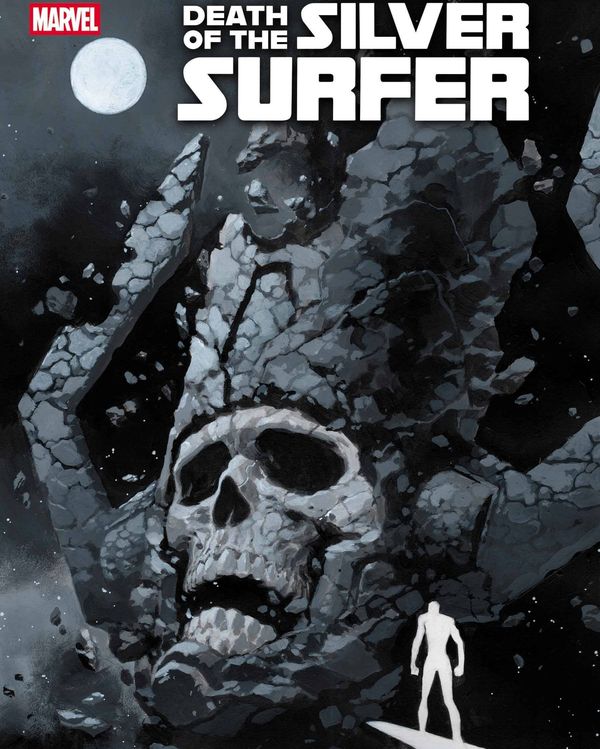
Death of the Silver Surfer #2, by Marvel on 7/16/25, throws readers right into a chaotic confrontation in deep space before grounding its narrative with heavy-handed social commentary back on Earth.
First Impressions
This comic felt like a wild ride from one end of the galaxy to the other, packing some serious punches with its stunning visuals. Yet, the story’s abrupt turns and overt messaging left me feeling a bit preached at, despite the initial thrill.
Recap
In Death of the Silver Surfer #1, our hero, Norrin Radd, faced a new, mysterious concept known simply as “Death.” This cosmic force seemed unstoppable, consuming everything in its path, and the Silver Surfer found himself desperately trying to comprehend and combat a power that callously consumed life. He chose to combat “Death” by stopping a war in Santo Marco. The issue then introduced Agent Koh of the Bureau of Alien Neutralization who zealously attacked the Silver Surfer in a worldwide policy of purging “monsters” from the Earth i.e. aliens who are dangerous.
Plot Analysis
The comic opens “on the other side of the galaxy” where an autonomous being stands watch over the corpse of Galactus, repeating a chilling warning: “Go back. The only thing here is Death.” This being states the corpse contains energy no mortal can control, promising annihilation. A group of humans, led by cocky Director Harmon, arrogantly pushes forward despite the warnings from their crew, eager to harness or combat this immense power, even if it means depleting their ship’s reserves. The director, dismissing warnings about the Galactus’s power, proclaims his intent to “have some fun” and challenges its dominion over cosmic forces, believing himself capable of controlling “power only for the gods”.
Meanwhile, the Silver Surfer, Norrin Radd, appears on Earth, helping a boy who got stuck climbing a tree. His presence, however, is met with fear and aggression from local authorities who perceive him as a threat, dubbing him a “monster” and a “silver freak”. They open fire, prompting the Surfer to shield innocent children, highlighting his benevolent nature against their prejudice. Bizarrely, the children also turn on the Silver Surfer and run away. This scene abruptly transitions to the “Bureau of Alien Neutralization Subsatellite Headquarters,” revealing the existence of an organization dedicated to identifying and dealing with aliens on Earth.
Within the Bureau, a heated debate ensues between a young agent, Kelly Koh, and her mother. Kelly, hardened by her role, insists on the necessity of neutralizing aliens like the Silver Surfer, arguing that he is “not people” and a danger, even though he saved her mother’s life. Her mother, however, challenges Kelly’s prejudiced views, questioning why heroes like Thor and Carol Danvers are exempt from the Bureau’s scrutiny while the Surfer is targeted. This dialogue starkly portrays the bureaucratic and often xenophobic approach to extraordinary beings.
The comic then intercuts between Kelly deploying advanced weaponry from the Bureau as she chases down a boy in the desert, shooting him in the face multiple times. The boy turns out to be Skaar. The Silver Surfer arrives to stop Koh, but he’s overwhelmed by the cosmic the feeling that Galactus’s power has been tapped in space. The issue ends with Harmon and his team abandoning Galactus’s corpse with massive amounts of energy as Silver Surfer flies to the corpse to stop what has been unleashed.
Story
The story of Death of the Silver Surfer #2 is a tale of two very different halves, awkwardly stitched together. On one hand, you have the cosmic horror of Galactus’s awakening/return/zombification(?), which is genuinely intriguing and promises a grand, destructive narrative. On the other, the Earth-bound plotline, featuring the Bureau of Alien Neutralization, is less a subtle exploration of prejudice and more a sledgehammer of a metaphor for xenophobia and immigration. The dialogue, particularly between Kelly and her mother, is far too on-the-nose, sacrificing nuance for directness, making the social commentary feel preachy rather than thought-provoking. While the intention to address real-world issues is commendable, the execution is so heavy-handed it detracts from any potential depth the narrative could achieve, reducing complex themes to simple good-vs-evil binaries.
Art
Sumit Kumar’s art, vibrantly colored by Frank D’Armata, is undeniably the standout element of this issue. The cosmic scenes are breathtaking, conveying the immense power and terror of the Galactus energy with swirling energies and imposing silhouettes. The Silver Surfer himself is rendered with a sleek, ethereal grace that makes his actions fluid and impactful. Even the more grounded Earth scenes benefit from sharp line work and dynamic layouts, particularly during the confrontation between the Surfer and the authorities. The visual storytelling is strong, capable of conveying intense emotion and grand scale without relying solely on dialogue. It’s imaginative and consistent, making even the weaker narrative points visually engaging.
Characters
The characters in this issue, while serving their plot functions, largely fall flat due to their one-dimensional portrayals. Director Harmon is a caricature of arrogance, solely existing to demonstrate humanity’s foolish ambition. On Earth, Kelly Koh, the agent from the Bureau of Alien Neutralization, is presented as the embodiment of anti-alien sentiment, with her arguments often feeling like a thinly veiled political manifesto rather than genuine character development. Her mother, while offering a counter-argument, is equally defined by her position in the debate. The Silver Surfer, normally a character of deep introspection, is reduced to a symbol of misunderstood benevolence, his internal struggles taking a backseat to the overt messaging. The lack of subtle characterization prevents any real emotional investment or development.
Positives
The comic genuinely excels in its visual execution, presenting a Silver Surfer that moves with incredible fluidity and power across the pages. The cosmic sequences are a feast for the eyes, capturing the vastness and terror of the new universal threat with vibrant colors and impressive scale. The dynamic action scenes, both in space and on Earth, are visually compelling and effectively convey the sheer force involved, demonstrating a strong artistic vision that elevates the storytelling. The imaginative designs for the cosmic entity and the Bureau’s tech provide a fresh aesthetic that captivates the reader from panel to panel.
Negatives
The most glaring flaw in this issue is its heavy-handed approach to metaphors regarding xenophobia, immigration, and immigration law enforcement. The dialogue feels less like natural conversation and more like a political soapbox, with characters spouting lines that are too direct and lacking in subtlety. The “Bureau of Alien Neutralization” is an obvious stand-in for real-world immigration agencies, and the interactions within it, particularly the debate between Kelly and her mother, strip away any potential for nuanced commentary, reducing complex societal issues to simplistic good-versus-evil pronouncements. This overt messaging constantly pulls the reader out of the narrative, making the story feel less like a compelling superhero adventure and more like a poorly disguised public service announcement.
About The Reviewer: Gabriel Hernandez is the Publisher & EIC of ComicalOpinions.com, a comics review site dedicated to indie, small, and mid-sized publishers.
Follow @ComicalOpinions on YouTube, Facebook, Instagram, and Twitter
Final Thoughts
Death of the Silver Surfer #2 is a visually striking comic that unfortunately drowns its imaginative cosmic tale in a deluge of heavy-handed social commentary. While the art truly shines, delivering stunning cosmic vistas and dynamic action, the narrative’s lack of subtlety regarding xenophobia and immigration makes it a difficult read. The characters, particularly those within the Bureau of Alien Neutralization, feel like mouthpieces for political arguments rather than organic individuals. Despite its visual triumphs and imaginative scope, the issue stumbles in its execution of deeper themes, leading to a mixed bag of cosmic wonder and clunky allegories.
5.5/10
We hope you found this article interesting. Come back for more reviews, previews, and opinions on comics, and don’t forget to follow us on social media:
Connect With Us Here: Weird Science DC Comics / Weird Science Marvel Comics
If you’re interested in this creator’s works, remember to let your Local Comic Shop know to find more of their work for you. They would appreciate the call, and so would we.
Click here to find your Local Comic Shop: www.ComicShopLocator.com
As an Amazon Associate, we earn revenue from qualifying purchases to help fund this site. Links to Blu-Rays, DVDs, Books, Movies, and more contained in this article are affiliate links. Please consider purchasing if you find something interesting, and thank you for your support.
 Weird Science Marvel Comics