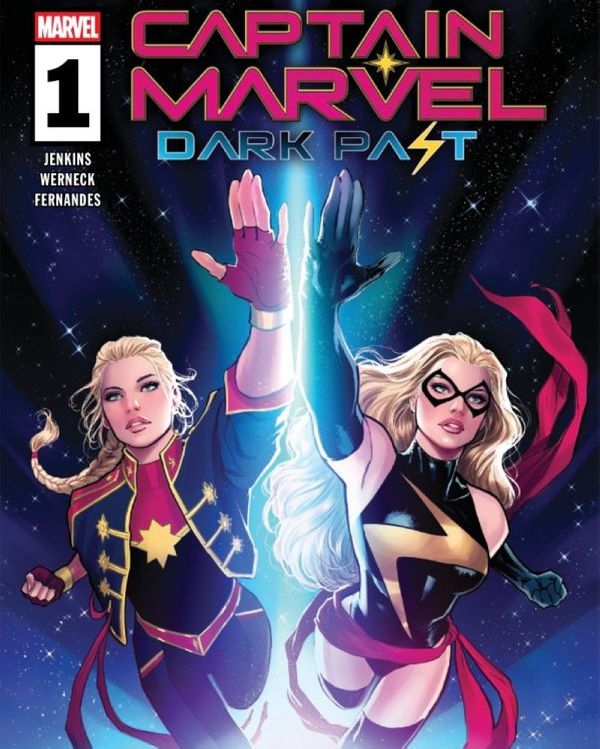
- Written by: Paul Jenkins
- Art by: Lucas Werneck
- Colors by: Rod Fernandes
- Letters by: VC’s Joe Caramagna
- Cover art by: Lucas Werneck
- Cover price: $4.99
- Release date: April 1, 2026
Captain Marvel #1 (Marvel, 4/1/26): Paul Jenkins and Lucas Werneck revisit Carol Danvers’ psyche as her lost memories and “Seventh Sense” resurface in a psychological mystery. Werneck’s art is kinetic. Verdict: Worth reading for fans.
First Impressions
This issue feels like a quiet, internal reset for a character who has been through every cosmic meat grinder imaginable. You walk into a rainy New York scene with Carol and Tony Stark, and the atmosphere immediately sets a somber, introspective tone that prioritizes character over explosions. Paul Jenkins leans into the confusion of Carol’s fractured mind with a veteran’s touch, making her “Seventh Sense” feel more like a burden than a superpower. The dialogue between the two Avengers is sharp and lived in, reminding us why their friendship works even when they are bickering over coffee. It is a slow burn start, but it manages to hook you with the promise of a deeper, perhaps darker, look at Carol’s human roots.
Plot Analysis (SPOILERS)
Carol Danvers is struggling with a sensory overload of memories that include visions of her father and her childhood home in Maine. These flashes are jumbled, mixing her past with possible futures and leaving her feeling disconnected from her own identity. She confides in Tony Stark during a cold New York evening, admitting that her “Seventh Sense” is returning in a way that feels dangerously unpredictable. Tony worries about her mental health, suggesting her trauma might be manifesting as PTSD after years of cosmic conflict.
While Tony pushes for her to see a therapist, Carol remains convinced that something systemic and sinister is lurking in the shadows of her history. After a surprisingly even fight against a powered-up Wrecking Crew, Carol enlists Jessica Drew, aka Spiderwoman, to help her search for clues, leading to a scrap of paper with the “DNVR” insignia, suggesting that her family’s past is intertwined with a secret agenda. The issue concludes with Carol realizing that the only way to unravel this knot is to confront the person who took her memories in the first place. She needs Rogue’s help to navigate the jumbled landscape of her own mind before the predicted “bad thing” finally happens.
Writing
Jenkins delivers a strongly paced introduction that swaps standard superhero bombast for psychological tension. The dialogue between Carol and Tony feels authentic and carries the weight of two people who have seen too many wars. There is a thematic depth here concerning identity and the reliability of memory that elevates the issue above a standard “punch the villain” debut. However, the heavy focus on exposition through dialogue might feel a bit slow for readers looking for immediate action.
Art
Lucas Werneck’s character acting is the standout feature of this issue. He captures the subtle frustration in Carol’s eyes and the pragmatic concern in Tony’s posture with impressive clarity. The transitions between the rainy, blue-hued present and the warm, sepia-toned memory fragments in Maine are handled with a professional eye for color theory. Rod Fernandes uses these shifts to guide the reader through Carol’s fractured timeline without the need for clunky captions.
The layouts are clean and prioritize narrative flow over flashy, experimental paneling. Even in the more static scenes of two heroes talking over coffee, Werneck maintains visual interest through varied “camera” angles and tight close-ups. The inks are sharp and provide a grounded feel to the urban setting, making the supernatural flashes of the Seventh Sense feel all the more jarring.
Character Development
This issue is a high-level example of grounded character motivation. Carol’s drive is not just a call to heroics, but a desperate need for self-understanding in the face of mental dissociation. Her vulnerability is balanced by her characteristic stubbornness, making her feel more relatable than she has in recent cosmic-level runs. Jenkins effectively uses Tony as a foil to highlight Carol’s isolation, cementing the stakes as purely personal.
Originality & Concept Execution
While the “forgotten past” trope is a staple of the genre, Jenkins refreshes it by tying it to the specific trauma of Carol’s history with Rogue. The execution succeeds because it treats the “Seventh Sense” as a legitimate psychological hurdle rather than just a plot device to foreshadow the next villain. It feels like a mature take on a character who is often defined more by her power level than her internal life.
Pros and Cons
What We Loved
- Excellently paced character dialogue between Carol and Tony.
- Vividly sepia-toned memory sequences that clarify narrative shifts.
- Authentic emotional stakes regarding Carol’s fragmented mental health.
Room for Improvement
- Heavy expositional dialogue slightly slows the narrative momentum.
- Standard New York setting lacks a unique visual identity.
- Initial conflict feels somewhat predictable for a mystery setup.
About The Reviewer: Gabriel Hernandez is the Publisher & EIC of ComicalOpinions.com, a comics review site dedicated to indie, small, and mid-sized publishers.
Follow @ComicalOpinions on YouTube, Facebook, Instagram, and Twitter
The Scorecard
Writing Quality (Clarity & Pacing): 3/4
Art Quality (Execution & Synergy): 4/4
Value (Originality & Entertainment): 1/2
Final Verdict
Captain Marvel: Dark Past #1 is a measured, veteran opening that trades flashy combat for a deep, psychological dive into Carol Danvers’ psyche. The sharp dialogue and expressive art make the character’s internal struggle feel palpably tense and worth the investment. While it leans heavily on established tropes, the creative synergy between Jenkins and Werneck ensures the story remains grounded and engaging. Ultimately, this issue earns its spot on the pull list by promising a mature exploration of identity that actually cares about the person behind the mask.
8/10
We hope you found this article interesting. Come back for more reviews, previews, and opinions on comics, and don’t forget to follow us on social media:
Connect With Us Here: Weird Science DC Comics / Weird Science Marvel Comics
If you’re interested in this creator’s works, remember to let your Local Comic Shop know to find more of their work for you. They would appreciate the call, and so would we.
Click here to find your Local Comic Shop: www.ComicShopLocator.com
As an Amazon Associate, we earn revenue from qualifying purchases to help fund this site. Links to Blu-Rays, DVDs, Books, Movies, and more contained in this article are affiliate links. Please consider purchasing if you find something interesting, and thank you for your support.
 Weird Science Marvel Comics