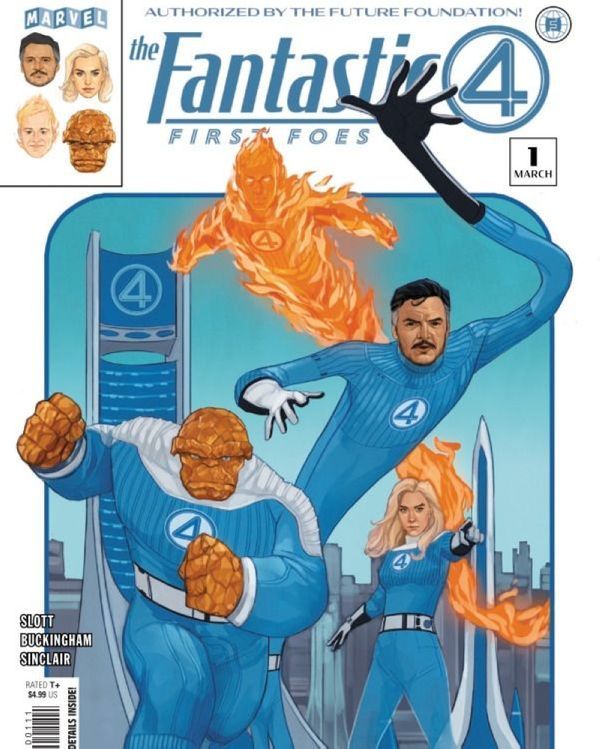
- Written by: Dan Slott
- Art by: Mark Buckingham
- Colors by: Alex Sinclair
- Letters by: VC’s Joe Carmagna
- Cover art by: Phil Noto (cover A)
- Cover price: $4.99
- Release date: March 25, 2026
The Fantastic 4: First Foes #1 (Marvel, 3/25/26): Writer Dan Slott and artist Mark Buckingham deconstruct Rene Rodin, aka the Mad Thinker, during the Excelsior’s first flight. This origin lore dump frames a villain’s birth through stolen scientific credit. Kinetic and sharp. Verdict: A must-read for FF and Silver Age fans.
First Impressions
Opening this one-shot feels like a measured return to the basics of the Marvel Universe, where we strip away the modern cosmic noise to focus on a single, bitter human heart. Dan Slott and Mark Buckingham establish a calm, insider tone that looks at the systemic cost of being a hero in the public eye. Focusing on the man who stayed behind in mission control provides a pragmatic perspective on an origin story we have seen a thousand times before. It’s a quiet but sharp opening that values psychological weight over the usual high-energy spectacle of the team’s early adventures.
Plot Analysis (SPOILERS)
The story introduces Professor Rene Rodin, the brilliant academic who ran mission control during the maiden flight of the Excelsior and provided the calculations to bring Reed’s crew home. While the world celebrates the new superheroes, Rodin finds himself quickly forgotten by the media as his own life’s work is overshadowed by the Fantastic Four’s celebrity. He watches with growing resentment as his ideas for artificial brains and smart cities are ignored by a public that only cares for monsters and cosmic spectacle. This isolation breeds a deep bitterness in a man who feels he is the true hero of the story.
The tension reaches a breaking point when Reed Richards announces a new smart city initiative that Rodin believes was stolen directly from his own research files. This perceived betrayal transforms Rodin’s professional frustration into a cold obsession with reclaiming his legacy through control and calculation. He adopts the name of the Great Thinker, determined to prove that his mind is superior to the physical powers of his former student. The issue concludes by setting the stage for a lifelong rivalry grounded in the petty, human ego of a man who was left behind.
Writing
Slott masterfully accelerates the pacing by blending the high-stakes tension of the Excelsior flight with the slow-burn psychological decay of Rene Rodin. The dialogue hits authentically with an academic weight that makes the intellectual rivalry between mentor and student feel earned rather than caricatured. Rodin serves as a clear focal character with a goal of recognition, but his journey is constantly blocked by the obstacle of Reed’s unintentional celebrity. The stakes are entirely internal, focusing on the systemic issue of how credit is distributed in a world that values flashy heroics over quiet, scientific breakthroughs.
Art
Mark Buckingham’s pencils brilliantly capture the retro aesthetic of the early space age with clean lines and expansive, masterfully composed layouts. His character acting is particularly sharp, using subtle facial shifts to track Rodin’s transition from a confident academic to a man consumed by a jagged jealousy. The panel flow during the mission control sequences masterfully builds a sense of claustrophobia that mirrors Rodin’s internal state as the world outside celebrates without him.
Alex Sinclair’s color palette masterfully supports this mood by using warm, hopeful golds for the public scenes and cool, clinical grays for Rodin’s private obsession. The tonality shifts masterfully as the shadows deepen around the protagonist, signaling his final transition into the persona of the Mad Thinker. Every page crackles authentically with a sense of era-appropriate detail, making the visual experience feel like a masterfully restored piece of history. This synergy between the art team masterfully elevates a simple origin into a vibrant, atmosphere-driven character study.
Character Development
Rene Rodin is a masterfully realized character whose motivations are grounded in the relatable, if petty, desire for professional validation and legacy. His consistency as a brilliant yet overlooked figure makes his turn toward villainy feel inevitable rather than a sudden shift in personality. The journey from a hero in mission control to a bitter antagonist provides a tragic look at how ego can warp even the brightest minds. By the end, Rodin’s obstacles are clearly defined as his own pride and the world’s indifference, making him a relatable villain for the modern age.
Originality & Concept Execution
The concept of retelling the Fantastic Four’s earliest days through the eyes of their first foes is a fresh idea that revitalizes classic lore. This issue succeeds in its premise by giving the Mad Thinker a complex origin that moves beyond the typical mad scientist tropes. It delivers on the basics of a strong story while offering a pragmatic look at the systemic failures of the superhero celebrity culture. The execution feels distinct and necessary, proving that there are still new stories to tell within the foundation of the Marvel Universe.
Pros and Cons
What We Loved
- Masterfully precise character acting in Buckingham’s pencils conveys deep emotional weight.
- The sharp, pragmatic dialogue avoids standard comic book cliches.
- Sinclair’s expert color theory masterfully contrasts public heroism with private obsession.
Room for Improvement
- The transition between the television studio and the laboratory feels slightly abrupt.
- Reed Richards appears oblivious to a fault during his brief interactions.
- Some background figures lack the detailed finish of the main characters.
About The Reviewer: Gabriel Hernandez is the Publisher & EIC of ComicalOpinions.com, a comics review site dedicated to indie, small, and mid-sized publishers.Follow @ComicalOpinions on YouTube, Facebook, Instagram, and Twitter
The Scorecard
Writing Quality (Clarity & Pacing): 3.5/4
Art Quality (Execution & Synergy): 3.5/4
Value (Originality & Entertainment): 1.5/2
Final Verdict
The Fantastic 4: First Foes #1 is a strongly executed character study that earns its place on your pull list by offering a sharp look at the roots of villainy. While the slightly abrupt transition between major scenes might distract some readers, the precise character acting and expert color theory ensure the story stays grounded. This comic avoids the usual traps of nostalgia by focusing on the pragmatic reality of professional jealousy and stolen credit. It is a sophisticated narrative that treats the reader like an adult while delivering a definitive origin for a classic antagonist. If you value deep character work and atmospheric art, this is an issue that justifies its cover price without the need for hype.
8.5/10
We hope you found this article interesting. Come back for more reviews, previews, and opinions on comics, and don’t forget to follow us on social media:
Connect With Us Here: Weird Science DC Comics / Weird Science Marvel Comics
If you’re interested in this creator’s works, remember to let your Local Comic Shop know to find more of their work for you. They would appreciate the call, and so would we.
Click here to find your Local Comic Shop: www.ComicShopLocator.com
As an Amazon Associate, we earn revenue from qualifying purchases to help fund this site. Links to Blu-Rays, DVDs, Books, Movies, and more contained in this article are affiliate links. Please consider purchasing if you find something interesting, and thank you for your support.
 Weird Science Marvel Comics