- Written by: Paul Jenkins
- Art by: Christian Rosado
- Colors by: Matt Milla
- Letters by: VC’s Joe Caramagna
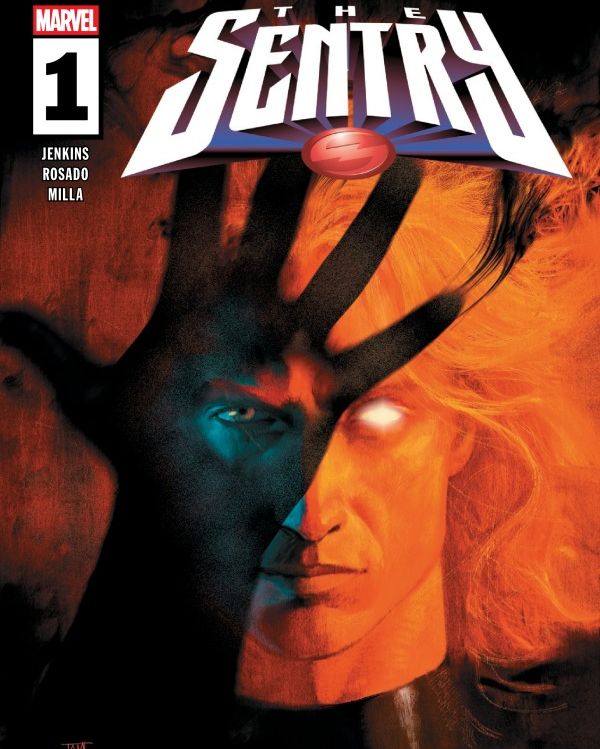
- Cover art by: Alex Maleev
- Cover price: $4.99
- Release date: March 18, 2026
The Sentry #1 (Marvel, 3/18/26): Writer Paul Jenkins and artist Christian Rosado anchor a psychological character study of Robert Reynolds grappling with godlike power, a decaying status quo, and an escalating crisis of conscience, framed as a cosmic superhero tragedy. The execution is atmospheric and emotionally heavy but uneven in momentum, with strong character work and moody visuals that make it worth reading for Sentry fans who want introspective drama over spectacle; Verdict: For die-hard fans only.
First Impressions
You drop into this issue expecting a simple relaunch pitch, and instead you get a slow, bruised walk through a man who knows he is losing ground to his worst self. The opening Laika memory, the Watchtower isolation, and that chilling visit to Fisk hit with a very specific kind of dread that feels less like superheroics and more like someone confessing things they will never say out loud in therapy. The tension between Sentry’s heroic performance at the Avengers presser and the intrusive narration that keeps poking at his lies crackles authentically, so you feel the gap between the glossy stage show and the rotting core underneath. By the time he lets the tsunami victims and the mounting crystal disaster become just more weight on the pile while he clings to a dying dog, the book plants a clear flag that this is not about big fights, it is about how long you can pretend you are still the hero when the math stopped working a while ago.
Plot Analysis (SPOILERS)
The story begins with a primer on who the Sentry is, laying out his absurd power set and the balancing presence of the Void, then cuts to a childhood fixation on Laika that seeds his lifelong guilt and longing to undo the irreparable. In the present, the Void casually appears in Fisk’s orbit, kills his protective entourage in a vacuum trick, and uses Fisk’s own language of messages and cruelty to promise a slow, deliberate destruction of everything Fisk values, including his body, purely out of hatred. From there, the issue pivots to Sentry’s public face at an Avengers press conference, where he banters with Reed, Sue, Lindy, Spider-Man, Iron Man, and Captain Marvel, downplays his long absence as classified alien business, and puts on a charming show for reporters while internal caption boxes goad him to confess what the Void has been doing in the dark reaches of space. The tone keeps toggling between bright superhero PR and intrusive, accusatory narration that points out how much of Sentry’s persona is a “dog and pony show” designed to keep people entertained, reassured, and safely distracted from the truth.
Later, a flashback to a conversation with Lindy about space and aliens shows Bob dodging questions about what he has really seen while the captions beg him to admit the Void’s atrocities and his own feelings of worthlessness, then the focus moves to Watchdog’s failing health, which Lindy hopes Sentry can somehow fix. Bob promises to help, calls on C.L.O.C. to scan the dog, and then disappears into global surveillance, jumping between news feeds about an unexplained tsunami he helped convert to steam, a submerged island linked to Fisk’s disgraced billionaire associate, and an expanding crystalline growth that knocks out power worldwide. As C.L.O.C. shifts into “therapy mode,” Bob asks if people can truly lie to themselves, then quietly admits that the old balance between Sentry’s good acts and the Void’s evil has broken and that he has done things he cannot forgive, while the narration spells out that the Void has tipped the scales and is winning. When C.L.O.C. finally delivers the prognosis that Watchdog is beyond saving, Bob melts down, a surge of power cracks the sky, and even as Captain America, Iron Man, Hulk, and Spider-Man call frantically for his help against the crystal threat, Sentry refuses to respond, staring at a Newton’s cradle while the captions insist he could not save Laika, cannot save Watchdog, and may not be able to save himself, ending the issue on a “To be continued” beat that leaves the heroes in danger and Sentry paralyzed.
Writing: Pacing, Dialogue, Structure
Paul Jenkins leans into a deliberate, introspective structure that favors internal monologue and thematic repetition over clean, external escalation, which means the issue reads more like the first chapter of a novel than a standard superhero #1. The pacing alternates between tight, disturbing scenes like the Fisk confrontation and Watchdog’s diagnosis and broader montage sequences of news feeds and global anomalies, so the emotional through line stays on Bob’s crumbling self-deception even when the plot jumps from New York to the South Pacific to worldwide power failures. Dialogue lands with a natural, conversational rhythm during the Avengers press conference and the Lindy scenes, especially when Sue deflates Lindy’s insecurity or when Iron Man shrugs about Hulk’s whereabouts, while the captions use second-person address and needling commentary to keep you inside Sentry’s fractured head. Thematically, Jenkins hits the basics hard: a focal character haunted by guilt, a goal to stay “balanced” between Sentry and Void, a journey through denial and looming confession, solid stakes in both global disasters and the small tragedy of a dying dog, and obstacles that are mostly internal, which makes the book feel psychologically rich but also occasionally static when you want the external plot threads to advance more decisively.
Art: Clarity, Composition, Color/Mood
Christian Rosado’s art keeps the storytelling clear and grounded, even when the script layers on heavy internal narration, and his panel compositions guide your eye cleanly through dense dialogue and caption blocks. The Fisk sequence uses tight close-ups, stark lighting, and the sudden visual of bodies drifting in space to sell the Void’s cruelty with a kind of cold, clinical precision, while the resort tsunami sequence expands into wide shots that make Sentry’s “Halcyon Mode” intervention feel massive without losing track of where the Avengers sit in the scene. Character acting reads well across the board, from Lindy’s mix of affection and worry, to Bob’s strained smiles at the press conference, to the quiet devastation on his face when C.L.O.C. delivers Watchdog’s prognosis, so you never lose the emotional beat even when the backgrounds fall away. The crystal attack on Hulk and Spider-Man lands with jagged, painful energy, using sharp shapes and aggressive angles that make the threat feel invasive rather than just decorative.
Matt Milla’s colors lean into a moody, restrained palette that supports the book’s psychological weight instead of chasing flashy spectacle, which helps Sentry’s golden glow and the blinding white of the Void pop as visual manifestations of that internal tug-of-war. The Watchtower interiors and night scenes carry cool blues and muted tones that make Bob look small against his own technology, while the tropical resort and tsunami play with warmer hues that get literally boiled into steam, turning a disaster into an eerie, foggy aftermath. During the crystal sequences, the pinkish, alien structures slice through otherwise grounded city palettes, so the intrusion feels wrong in a way that supports the script’s insistence that something systemic is spreading. Overall, the art and color work in concert to keep the focus on emotional clarity and tone, even when the panel count and caption density risk feeling text-heavy.
Character Development: Motivation, Consistency, Relatability
This issue nails Sentry as a focal character who is painfully aware that his founding bargain no longer holds and that his heroic branding has become a lie he tells the world and himself, which gives his every choice a desperate edge. His motivation to maintain the illusion of balance, to keep Lindy reassured, and to cling to Watchdog as one small life he can still protect feels consistent with the way the narration frames his history with Laika and the Void’s rise, so you understand why he freezes instead of rushing out to answer the Avengers’ calls. Lindy reads as a grounded, emotionally honest partner who does not get a huge amount of panel time but still registers as someone who loves Bob and senses his distance, while supporting players like Reed, Sue, Spider-Man, and Iron Man function more as mirrors for Sentry’s public persona than as fully developed characters in this chapter. The Void operates as both external villain and internal voice, and that duality keeps the stakes intimate, although the book sometimes leans so hard into Sentry’s self-loathing that newer readers might find him more exhausting than relatable unless they enjoy stories about people who are already half-convinced they have lost.
Originality & Concept Execution
On paper, “Sentry struggles with the Void and fails to live up to his own balance rule” is familiar territory for the character, but Jenkins freshens it by tying that balance to specific, grounded images like Laika’s lonely death and Watchdog’s decline rather than purely abstract cosmic horror. The issue also extends the original concept by making the supposed equilibrium explicitly broken and by turning Sentry’s self-deception into the central problem, so the story becomes less about whether he can punch the Void and more about whether he can admit to himself and others that the ledger is already deep in the red. The global crystal phenomenon, the electrical blackouts, and Hulk’s agonizing entrapment add a new mystery layer that hints at a larger, potentially fresh threat, though this chapter keeps those elements mostly in setup mode without revealing the twist behind them. As a concept, a man with the power of a million exploding suns who cannot bring himself to pick up the comm when his friends are dying still lands with a strong, bleak punch, even if the book so far prioritizes mood and interiority over delivering a distinct new hook that casual readers have not seen from Sentry before.
Pros and Cons
What We Loved
- Laika and Watchdog threads quietly anchor Sentry’s guilt and humanity.
- Void’s meeting with Fisk crackles with precise, unnerving cruelty and presence.
- Rosado and Milla build moody, readable pages that handle dense captions cleanly.
Room for Improvement
- Heavy narration sometimes slows momentum and crowds visual breathing room.
- Crystal disaster hook feels underexplained by the final page of this issue.
- New readers may struggle with the unresolved balance “rules” of Sentry and Void.
About The Reviewer: Gabriel Hernandez is the Publisher & EIC of ComicalOpinions.com, a comics review site dedicated to indie, small, and mid-sized publishers.Follow @ComicalOpinions on YouTube, Facebook, Instagram, and Twitter
The Scorecard
Writing Quality (Clarity & Pacing): 3.2/4
Art Quality (Execution & Synergy): 3.4/4
Value (Originality & Entertainment): 1.2/2
Final Verdict
The Sentry #1 gives you a focused, psychologically heavy character piece that understands power, guilt, and self-deception better than most cape books, with the Laika and Watchdog threads, the brutal Fisk scene, and that chilling refusal to answer the Avengers all pointing toward a man who knows he is failing and cannot stop lying about it. On the plus side, the writing digs deep into motivation and internal stakes, the art and colors keep every grim beat readable and evocative. On the minus side, the pacing leans contemplative enough that the global crystal threat and the “before Infernal Hulk” positioning feel more like distant thunder than a concrete hook, and new readers may walk away with more questions about the Sentry/Void balance rules than answers. If your pull list has room for a slow-burn, introspective tragedy about a hero who might already be too compromised to save anyone, this earns a slot, but if you want clean on-ramps and big, decisive plot swings out of a #1, your money is probably better spent elsewhere.
7.8/10
We hope you found this article interesting. Come back for more reviews, previews, and opinions on comics, and don’t forget to follow us on social media:
Connect With Us Here: Weird Science DC Comics / Weird Science Marvel Comics
If you’re interested in this creator’s works, remember to let your Local Comic Shop know to find more of their work for you. They would appreciate the call, and so would we.
Click here to find your Local Comic Shop: www.ComicShopLocator.com
As an Amazon Associate, we earn revenue from qualifying purchases to help fund this site. Links to Blu-Rays, DVDs, Books, Movies, and more contained in this article are affiliate links. Please consider purchasing if you find something interesting, and thank you for your support.
 Weird Science Marvel Comics