- Written by: Joe Kelly
- Art by: Emilio Laiso
- Colors by: Marcio Menyz, Marte Gracia, Erick Arciniega
- Letters by: VC’s Joe Caramagna
- Cover art by: Pepe Larraz, Marte Gracia (cover A)
- Cover price: $4.99
- Release date: November 5, 2025
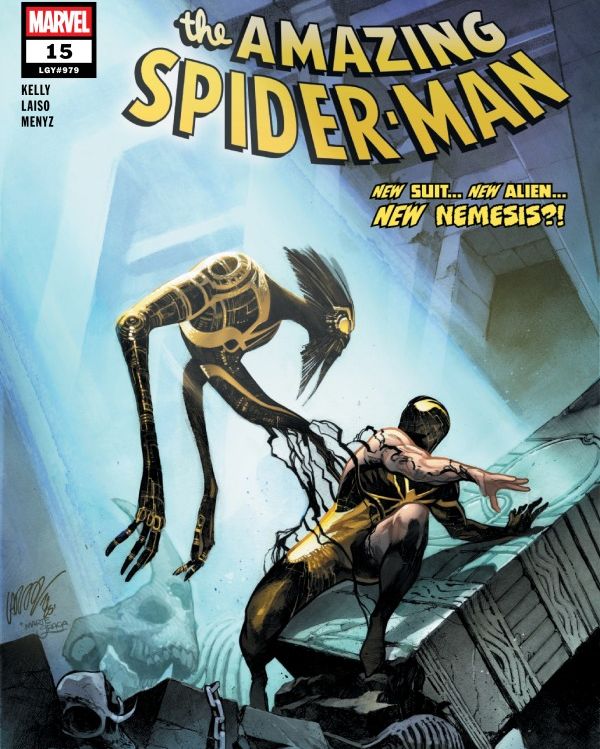
Amazing Spider-Man #15, by Marvel on 11/5/25, pits your wallet and patience against cosmic wrestling, a sentient suit, and dialogue flimsier than Spidey’s web-shooters after a hailstorm.
First Impressions
The opening salvo of this issue flings the reader into a messy blend of existential dread and slapstick banter that feels allergic to anything iconic about Spider-Man. Cosmic venues, a talking raccoon with a BFG, and a suit with more personality than the supporting cast all swamp the book with noise and no signature heart. Rather than the excitement of a classic Spider-tale, the start left me pining for, well, any recognizable Spider-Man at all.
Recap
Ben Reilly, disguised as Peter Parker, staggers through Peter’s New York life, struggling with social chaos and professional facades while Norman Osborn, dressed as Spider-Man, makes a shambles of heroics on the city’s streets. Both men’s double lives bend under pressure when a Spider Slayer attacks a cafe, dragging out forced team-ups and undercooked new heroes like Captain Kintsugi. With personal secrets teetering on disastrous reveals and the Hobgoblin looming as the real threat, the prior issue left the Spider-cast fractured and on edge.
Plot Analysis
Peter Parker (yes, the real one) begins in a state of apology and exhaustion, reuniting tearfully with Aunt May after a stretch of absence punctuated by danger and confusion. But the dream turns into a nightmare when Aunt May erupts in flame and accusations, forcing Peter awake aboard a spaceship. The story quickly shoves him alongside Rocket Raccoon, whose presence (and oversized gun) sets the tone: this is not New York, and subtlety is as absent as Peter’s responsible decision-making. Dialogue ricochets between forced jokes and blunt reminders that Peter is lost in the cosmic muck, all while the stakes for anyone who ever cared about Spider-Man feel unplugged.
Transported to a lawless space outpost, Peter must fend for himself, Rocket, and a sentient technarachnid suit, whose “factory reset” scene triggers a surreal, memory-tripping interlude during a battle royale accepted to clear Rocket’s debt to a gangster. Alien customs, gladiatorial brawls, and an ever-present sense of “Why am I here?” haunt both the hero and the narrative. Peter is coerced into a bizarre arena battle, staked not just on survival but on the emotional baggage that the sentient suit dredges up. The so-called main event – Peter fighting a monstrous alien named “Betty” – reads like a parody of wrestling entertainment, but with higher confusion and lower stakes.
The aftermath is more existential haze than catharsis. Peter, now freed from the symbiote-style suit, endures cosmic moralizing and trades quips with allies and antagonists who feel like they’ve wandered in from a Guardians of the Galaxy B-plot. Rocket’s subplot – the pursuit of information about his family – collides awkwardly with Peter’s “help everybody” compulsion, stretching their tenuous camaraderie. Attempts at closure get derailed by labor negotiations between monsters, half-hearted stabs at redemption, and space bureaucrats with a taste for grandstanding.
By the final pages, any hope for a grounded resolution evaporates as Peter and his cosmic companions meander through a maze of loose ends. The issue closes on a tired note: alliances remain temporary, and the supposedly game-changing sentient suit gets swept offstage with more shrug than sizzle.
Writing
The pacing oscillates between breathless chaos and languid speechifying, never settling into something that might resemble momentum or tension. Dialogue swings from faux-witty banter to thick blocks of self-explanation, rarely hitting emotional or comedic targets. Structurally, the comic lurches from scene to scene without a spine; nothing lingers long enough to matter, and narrative threads are abandoned as soon as they become interesting.
Art
The linework, credited to Emilio Laiso, is crisp and energetic, lending bright clarity even to the story’s most bewildering moments. Color work by Menyz, Gracia, and Arciniega keeps the cosmic settings vibrant and readable, helping to distinguish crowded alien arenas from Peter’s more grounded flashbacks. However, the page layouts and visual storytelling can’t rescue the plot from muddiness; even sharp art can’t manufacture drama where none exists.
Character Development
Peter’s motivation to get stronger, get home, stay good remains in a holding pattern, only occasionally breaking through the comic’s background noise. Supporting cast members (Rocket, the sentient suit, Xanto Starblood) are walking quirks with little depth or consistent intent. The emotional beats fumble because character decisions feel like arbitrary pivots, not honest evolutions.
Originality & Concept Execution
There’s ambition in taking Spider-Man off-world with new, alien challenges, but freshness is hamstrung by muddled execution. Gladiator bouts and sentient suits sound unique, but the issue can’t tie these elements into cohesive stakes or a satisfying arc. Instead, the originality feels skin-deep. Just more costumes and backdrops for Spider-Man to look dazed and lost.
Positives
The best thing on display is the art, from technicolor arena battles to snappy character poses, saving the narrative from total collapse. Peter’s brief emotional flashes, especially when confronting guilt and the urge to help others even hundreds of light-years from home, inject some humanity into the cosmic hijinks. The color and composition make the spacefaring chaos at least visually memorable, even if nothing else sticks.
Negatives
This issue piles cosmic nonsense atop existential treacle, losing all sense of what made Spider-Man relatable in the first place. Dialogue stalls the plot more often than it advances it. Attempts at drama or humor rarely connect, and every character, Peter included, is treated more like a piece of set dressing than a person you want to root for.
About The Reviewer: Gabriel Hernandez is the Publisher & EIC of ComicalOpinions.com, a comics review site dedicated to indie, small, and mid-sized publishers.Follow @ComicalOpinions on YouTube, Facebook, Instagram, and Twitter
The Scorecard
Writing Quality (Clarity & Pacing): [1/4]
Art Quality (Execution & Synergy): [2/4]
Value (Originality & Entertainment): [1/2]
Final Verdict
Amazing Spider-Man #15 is a breather you never asked for; a leap into space weirdness that forgets both the Spider and the Man. Wonderful art can’t patch the torn fabric of inconsistent writing, and readers are left with a soupy grab bag of cosmic clichés and squandered possibilities. If your comic pull list has any standards, this is one interstellar detour you do not need to take.
4/10
We hope you found this article interesting. Come back for more reviews, previews, and opinions on comics, and don’t forget to follow us on social media:
Connect With Us Here: Weird Science DC Comics / Weird Science Marvel Comics
If you’re interested in this creator’s works, remember to let your Local Comic Shop know to find more of their work for you. They would appreciate the call, and so would we.
Click here to find your Local Comic Shop: www.ComicShopLocator.com
As an Amazon Associate, we earn revenue from qualifying purchases to help fund this site. Links to Blu-Rays, DVDs, Books, Movies, and more contained in this article are affiliate links. Please consider purchasing if you find something interesting, and thank you for your support.
 Weird Science Marvel Comics