- Written by: Jordan Morris
- Art by: Luke ross, Ramon Rosanas
- Colors by: David Curiel
- Letters by: VC’s Clayton Cowles
- Cover art by: Stefano Casselli, Fedrico Blee
- Cover price: $5.99
- Release date: April 8, 2026
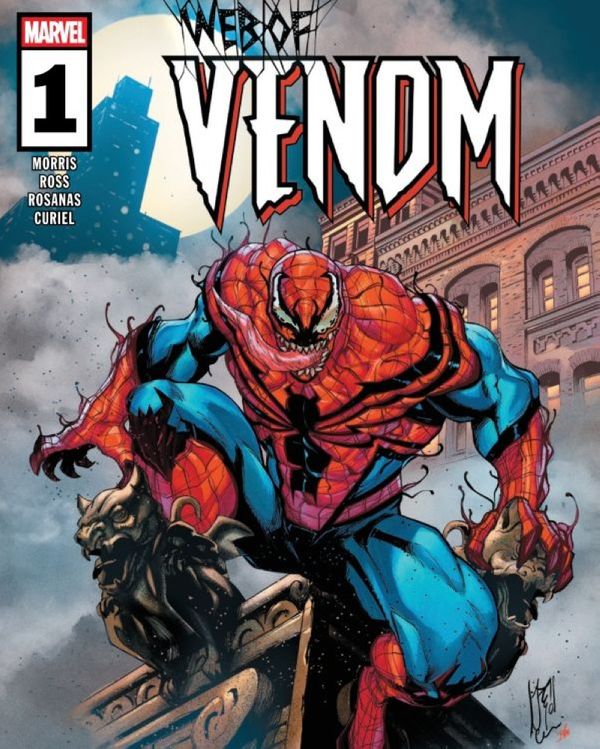
Web of Venom #1 (Marvel, 4/8/26): Writer Jordan Morris and artists Luke Ross and Ramon Rosanas deconstruct a RekRap-inspired Venom variant during a botched rescue mission for this self-aware satire. The execution feels tired and uneven. Verdict: Skip it.
First Impressions
You walk into this expecting a dark symbiote thriller, but what you get is a meta-commentary that feels like it is trying a bit too hard to wink at the audience. The opening panels of a bulky, “thicc” Venom variant attempting to mimic Spider-Man catchphrases immediately set a tone that is more concerned with Internet memes than meaningful stakes. Luke Ross and Ramon Rosanas provide steady, professional visuals that keep the absurdist action grounded, but the energy feels borrowed from better satires. It is the kind of book that makes you realize how many layers of variant logic we are currently buried under in the modern industry. Overall, the first few pages signal a slow-paced journey through a joke that might have worked better as a backup story rather than a full-priced one-shot.
Plot Analysis (SPOILERS)
The narrative centers on Fred Myers, aka Boomerang, now operating as a symbiote-powered variant, as he attempts to infiltrate a high-security facility to locate a missing friend. He starts the mission with a botched attempt at stealth, masquerading as a demonic version of Spider-Man to confuse the local guards. This leads to a series of slow-paced combat encounters where Fred utilizes his new alien physiology to create “Venorangs” and other projectile weaponry. The symbiote itself acts as a sarcastic coach, pushing Fred to embrace the absurdity of his new role while they systematically dismantle the security force.
Interspersed with the action are Fred’s internal monologues regarding his history with the late Herman Schultz and his desire to avoid higher-stakes cosmic conflicts. He reflects on his status as a criminal who just wants to steal enough to get by, even as he is forced into a battle against militants and monsters. The story concludes with Fred realizing he cannot simply return to his old life, though the actual rescue mission remains secondary to the issue’s self-aware humor. Ultimately, the plot serves as a vehicle for fourth-wall-breaking commentary on the state of the Marvel Universe rather than a standalone adventure.
Writing
Jordan Morris leans heavily into the self-aware, satirical voice, but the pacing drags significantly throughout the thirty-page runtime. While the dialogue between Fred and the symbiote has its witty moments, the constant fourth-wall winks feel like a distraction from the actual rescue goal. The five basics of a story are technically present, but the stakes feel diminished because the focal character treats every obstacle like a punchline. It is hard to care about the journey when the writing is more interested in discussing internet comments than the emotional weight of a friend’s death.
Art
Luke Ross and Ramon Rosanas handle the pencils with a level of clarity that keeps the chaotic fight scenes from becoming an illegible mess. The character designs, especially the “thicc” RekRap-inspired Venom, are rendered with a muscular heft that makes the slapstick violence feel surprisingly physical. Every “Venorang” strike and symbiote tendril is sharply inked, providing a visual consistency that the scattershot script often lacks. The artists manage to maintain a serious aesthetic even when the script is asking them to draw literal jokes.
David Curiel’s color palette plays a vital role in setting the mood, utilizing deep shadows and vibrant reds to evoke a traditional superhero atmosphere. This tonality creates an interesting contrast with the jokey script, making the fourth-wall breaks hit with a bit more of a surreal impact. The composition of the panels is masterfully executed, with layouts that guide the eye through the facility’s corridors and explosive action beats. Even if the pacing of the story feels glacial, the visual storytelling is professional and polished throughout.
Character Development
Fred Myers is usually a reliable source for high-quality character work, but this variant-heavy version feels like a step backward for the rogue. His motivation to save a friend is clear, but the intellectually stunted RekRap persona layers a level of artifice over him that makes it hard to connect. We see glimpses of the pragmatic veteran criminal under the symbiote, yet those moments are quickly buried under more jokes about “medium-boy crimes.” Consistency is sacrificed at the altar of satire, leaving Fred feeling more like a caricature than a protagonist with real agency.
Originality & Concept Execution
The concept of a variant of a variant of a variant is a bold premise, but in execution, it highlights the exhaustion of the multiverse trope. While the fourth-wall-breaking satire is meant to feel fresh, it ultimately feels like a rehash of better meta-books like Deadpool or Howard the Duck. The “Venorang” gimmick is a fun visual, but it does not do enough to elevate a premise that feels structurally thin. It is a concept that might have crackled in a shorter format but feels stretched thin as a primary feature.
Pros and Cons
What We Loved
- Sharply inked action sequences that maintain clarity during complex symbiote combat.
- Vibrant color palettes that effectively contrast the dark setting with the satirical tone.
- Creative use of “Venorang” weaponry which adds a unique visual flair to the fight choreography.
Room for Improvement
- Glacial pacing that makes a relatively simple rescue mission feel unnecessarily long.
- Over-reliance on jokes that undermines the established emotional stakes of the mission.
- Excessive variant logic that contributes to a sense of exhaustion with the current symbiote lore.
About The Reviewer: Gabriel Hernandez is the Publisher & EIC of ComicalOpinions.com, a comics review site dedicated to indie, small, and mid-sized publishers.
Follow @ComicalOpinions on YouTube, Facebook, Instagram, and Twitter
The Scorecard
Writing Quality (Clarity & Pacing): 1.5/4
Art Quality (Execution & Synergy): 3/4
Value (Originality & Entertainment): 0.5/2
Final Verdict
Web of Venom #1 is a prime example of why the industry obsession with variants and meta-humor is starting to hit a wall of diminishing returns. The issue manages to shine visuals-wise through sharply inked panels and creative weaponry that adds a brief spark to the action. However, the momentum is ultimately dragged down by glacial pacing and a relentless barrage of meta-jokes that prevent any real emotional connection to the story. This setup ultimately functions as a drawn-out joke for completionists rather than a meaningful entry in the Venom mythos.
5/10
We hope you found this article interesting. Come back for more reviews, previews, and opinions on comics, and don’t forget to follow us on social media:
Connect With Us Here: Weird Science DC Comics / Weird Science Marvel Comics
If you’re interested in this creator’s works, remember to let your Local Comic Shop know to find more of their work for you. They would appreciate the call, and so would we.
Click here to find your Local Comic Shop: www.ComicShopLocator.com
As an Amazon Associate, we earn revenue from qualifying purchases to help fund this site. Links to Blu-Rays, DVDs, Books, Movies, and more contained in this article are affiliate links. Please consider purchasing if you find something interesting, and thank you for your support.
 Weird Science Marvel Comics