
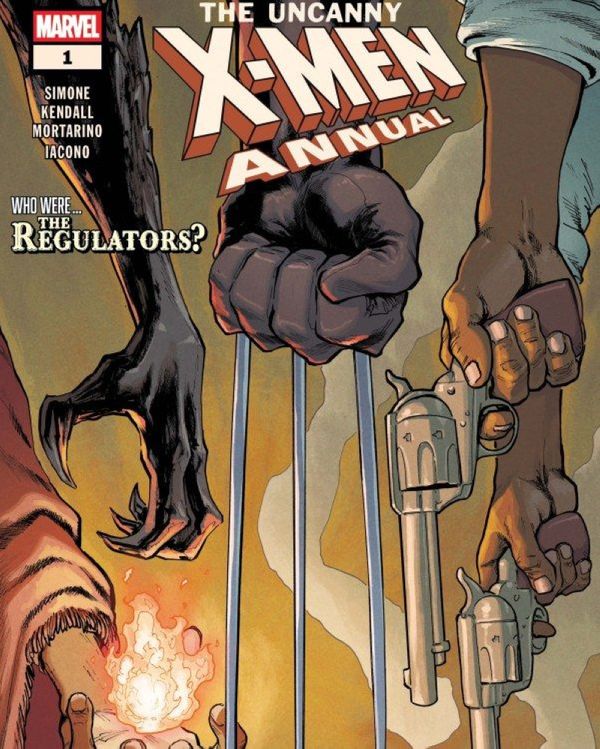
- Written by: Gail Simone, Mikki Kendall
- Art by: Francesco Mortarino, Elisabetta D’Amico
- Colors by: Mattia Iacono
- Letters by: VC’s Clayton Cowles
- Cover art by: David Marquez, Matthew Wilson
- Cover price: $4.99
- Release date: April 8, 2026
Uncanny X-Men Annual #1 (Marvel, 4/8/26): Writer Gail Simone and artist Francesco Mortarino deconstruct Slaughter Freedman and Wolverine through a roadside rescue and a Haven House reckoning, with a Regulators origin story. Verdict: Worth reading for its sharp character work and strong atmosphere, even if the structure is a little overstuffed.
First Impressions
This issue comes out swinging with a grim, dust-caked Western opener that knows exactly how to hook you fast. The slaughterhouse energy of the road ambush, followed by the absurdly elegant reveal of Caleb’s extra arms, gives the book a nasty little jolt of personality right away. Then it pivots into the New Orleans material and starts balancing mutant community warmth, threat, and old wounds with real confidence. The result is a comic that feels like it wants to be more than a side-story, and for the most part, it earns that ambition.
Plot Analysis (SPOILERS)
The issue begins with Slaughter Freedman on the road near New Orleans, escorting his son’s coffin while bandits stop him under the thin excuse of toll collection. He warns them off, reveals he has four arms, and guns down the gang with brutal efficiency before realizing the “dead” man in the coffin is actually still alive. That man turns out to be Wolverine, badly wounded and buried, and Slaughter digs him out of the grave before the story shifts into Haven House history.
From there, the comic jumps to the past establishing Haven House as a refuge for mutants and outcasts, with Mother Witchfire helping care for Wolverine and Lady Henrietta arriving under threat from Sentinels. The Regulators gather, confront a lynch mob, and protect innocent children by force, making Haven House into a safe place defined by action, not sentiment. In the modern-day material, Logan and Jubilee go into town, find Mala being harassed, and Logan intervenes before the issue closes on a quieter exchange about family, debt, and why he has been watching over the people tied to this place.
Writing
The pacing is brisk where it needs to be and deliberately wide-eyed where the story wants history to breathe, which makes the issue feel energetic without turning chaotic. The dialogue mostly lands with a rough, lived-in rhythm, especially in the Western sections, where the slang and moral certainty give the Regulators a strong voice. That said, the comic occasionally leans hard on exposition when it could trust a visual beat or a cleaner character gesture, and that slightly blunts the emotional edge. The thematic material about refuge, inherited pain, and chosen community is solid, but it lands best when the script lets people speak plainly instead of explaining its own meaning too loudly.
Art
Mortarino’s layouts handle the action cleanly, and the opening sequence benefits from a strong sense of movement, with horseback staging, gunfire, and body language all reading clearly at a glance. The panel flow keeps the Western violence tight and readable, which matters because the scene lives or dies on how quickly the reveal of Caleb’s power lands. Expressions also do serious work here, especially in the fear, defiance, and weary resolve that keep the confrontations from feeling like empty genre posing.
The color and mood shift smartly between eras, with the Western sections carrying a dusty, harsh tone and the Haven House material leaning into warmth, shadow, and a more human softness. That contrast gives the book real visual structure, and it helps the annual feel like two connected stories rather than a random pile of flashbacks. The nightclub sequence also benefits from the brighter palette, which makes Jubilee’s energy pop against the crowded room and keeps the emotional focus from getting lost in the noise.
Character Development
Logan comes off as stubborn, protective, and bruised in a way that fits him without flattening him into a walking catchphrase. Slaughter Freedman also gets enough texture to feel like more than a period gimmick, because the script ties his violence, grief, and loyalty into one consistent emotional engine. Jubilee’s role is lighter but still useful, since she gives the book wit and social footing while Logan handles the heavier lifting. Mala gets a strong enough introduction to register as a real person rather than just a plot stop, which matters because the comic clearly wants its refuge theme to feel lived in.
Originality & Concept Execution
The book’s big idea, a turn-of-the-century mutant refuge framed through a Western revenge story, is fresh enough to feel like it justifies the annual format. It smartly mixes frontier myth, mutant persecution, and family legacy without losing the X-Men’s core identity as a story about protection under pressure. The concept works best because it is not just aesthetic window dressing, it has a functional purpose in showing how Haven House became a real home. Still, the comic occasionally tries to stack too much backstory into one issue, which makes the originality land a little less cleanly than it could.
Pros and Cons
What We Loved
- Caleb’s reveal lands hard, with a clean, brutal action payoff.
- Haven House feels emotionally earned, not just decorative.
- The art keeps both timelines visually distinct and readable.
Room for Improvement
- Some dialogue explains too much instead of trusting subtext.
- The structure juggles a lot of lore in one issue.
- A few transitions feel slightly crowded and overpacked.
About The Reviewer: Gabriel Hernandez is the Publisher & EIC of ComicalOpinions.com, a comics review site dedicated to indie, small, and mid-sized publishers.Follow @ComicalOpinions on YouTube, Facebook, Instagram, and Twitter
The Scorecard
Writing Quality (Clarity & Pacing): 3/4
Art Quality (Execution & Synergy): 3/4
Value (Originality & Entertainment): 1/2
Final Verdict
Uncanny X-Men Annual (2026) #1 earns its place by delivering a sturdy, stylish mutant Western with real emotional weight and enough blood in the boots to justify the annual label. Its strengths are obvious, the atmosphere is rich, the character beats connect, and the central refuge idea feels meaningful, while its weakness is that it occasionally piles on more history than the page can comfortably carry. Even so, this is a smart buy for readers who want an issue that actually feels like it has something to say.
7/10
We hope you found this article interesting. Come back for more reviews, previews, and opinions on comics, and don’t forget to follow us on social media:
Connect With Us Here: Weird Science DC Comics / Weird Science Marvel Comics
If you’re interested in this creator’s works, remember to let your Local Comic Shop know to find more of their work for you. They would appreciate the call, and so would we.
Click here to find your Local Comic Shop: www.ComicShopLocator.com
As an Amazon Associate, we earn revenue from qualifying purchases to help fund this site. Links to Blu-Rays, DVDs, Books, Movies, and more contained in this article are affiliate links. Please consider purchasing if you find something interesting, and thank you for your support.
 Weird Science Marvel Comics