- Written by: Ryan North
- Art by: Vincenzo Carratu
- Colors by: Federico Blee
- Letters by: VC’s Joe Carmagana
- Cover art by: Adam Kubert, Rachelle Rosenberg (cover A)
- Cover price: $4.99
- Release date: December 3, 2025
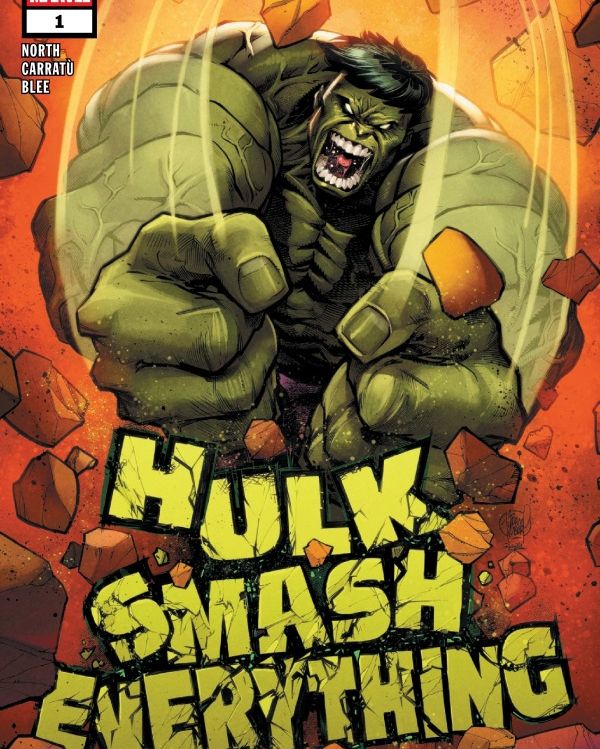
Hulk: Smash Everything #1, by Marvel on 12/3/25, immediately throws readers into a high-stakes supernatural conflict with all the finesse of a rampaging green monster breaking through a flimsy, cracked window.
First Impressions
The opening pages deliver an explosive visual feast that immediately grabs attention with dynamic action and expressive character work. The artwork pops off the page with vibrant colors and sharp line work that conveys movement and intensity effectively. However, the underlying conflict lacks sense and weight; it’s essentially the Hulk punching things while more powerful characters stand around explaining the obvious.
Plot Analysis
The issue opens with Doctor Strange being interrupted at the Sanctum Sanctorum by Wong, who’s shouting about an unspecified emergency. The Hulk crashes through the mystical wards protecting the building, but Strange and Wong quickly discover that the attack is actually a coordinated distraction orchestrated by the Leader, Dr. Samuel Sterns. Strange uses an astral spell to learn what’s really happening, revealing that Sterns impersonated Dr. Strange at a university lecture hosted by Bruce Banner, hit him in the back of the head with a frying pan (I’m not kidding) to get him to Hulk out, and lured the Hulk toward the Sanctum. The Leader’s true goal involves stealing the Ring of Zona from the Sanctum’s collection by breaking a basement window (again, I’m not kidding) to enter the Sanctum, which he then uses to bypass Doctor Doom’s magical and physical defenses protecting his treasure vault in Latveria.
With the Ring in hand, Sterns discovers the Time Platform of Doctor Doom and successfully retrieves an unnamed prize, though the issue never explains what he actually took or why it matters. Meanwhile, the Hulk continues his rampage, tearing apart magical restraints like the Crimson Bands of Cyttorak. Strange devises a plan to redirect the Hulk toward the Leader using a portal, and after significant effort channeling magical power alongside Wong, he successfully sends the Hulk to confront Sterns directly.
In the climactic sequence, the Hulk arrives in Doom’s lair and begins attacking The Leader. The Leader claims he’s calculated multiple ways to kill the Hulk and apparently activates some kind of time portal that sends the Hulk back to the time of dinosaurs. The Hulk, however, remains completely unfazed and smashes the dinosaurs with brutal indifference. The issue ends with the Hulk declaring his supremacy as the issue cuts to a cliffhanger promising continued conflict in the next installment.
The entire plot functions as a setup with minimal payoff; the Leader’s elaborate scheme culminates in him being completely outmatched, and the supposed solution to containing the Hulk fails instantly upon deployment. Nothing is resolved, nothing is explained, and the reader is left with more questions about basic plot logistics than investment in the characters.
Writing
The pacing races from scene to scene without ever slowing down to establish stakes or consequences. The dialogue feels robotic and functional, serving only to exposition-dump information rather than reveal character. Strange says things like “I’m entering the astral plane” and “I will deal with the Hulk” with all the emotional resonance of a user manual. Wong delivers every line with the same flat delivery regardless of context. The Hulk’s dialogue is reduced to variations of “Hulk smash,” which feels more like a gimmick than character voice. The structure itself presents a fundamental logic problem, the Sanctum Sanctorum, supposedly one of the most magically fortified locations in the Marvel Universe, is infiltrated not through magical weakness but through a smashed window. The Leader walks in the back door while the Hulk is kept busy crashing through the front, exposing the entire premise as absurdly contrived. No serious defenses exist, apparently.
Art
Vincenzo Carratù delivers genuinely impressive artwork with clean line work and dynamic compositions that make every panel easy to follow. The action sequences are well choreographed, and the Hulk looks appropriately massive and threatening. Federico Blee’s colors inject life into every scene, using vibrant greens and purples to establish mood while maintaining clarity throughout crowded panels. The Sanctum Sanctorum sequences have a mystical atmosphere that contrasts effectively with the raw brutality of Sterns’ lair. However, the art carries the entire issue; without the visual spectacle, readers would have nothing to latch onto because the story itself offers no substance.
Character Development
The characters have no development whatsoever. Strange acts as a problem solver without personality, Wong exists to follow orders, and the Hulk has one note: smash everything. The Leader’s motivation is painfully generic, world domination through possession of vague magical artifacts. His dialogue is insufferably pretentious, filled with self-congratulation about his “objectively brilliant” plan without ever explaining what makes it work or why readers should fear the outcome. The issue provides no reason to believe in any of these characters’ stakes or to care if their conflicts resolve positively or negatively.
Originality and Concept Execution
The premise itself, the Hulk in an out-of-control rampage triggering a magical crisis, is not new. Seeing the Hulk bounce between different powerful entities as a weapon or problem is familiar territory in Marvel comics. The issue offers nothing innovative within this framework; it’s purely execution-dependent, and the execution stumbles. The concept of using the Hulk as an unwitting tool in a larger scheme works in theory, but the issue never develops this tension. The Leader’s plan succeeds too easily, then fails too quickly, leaving no room for dramatic tension or clever resolution.
Positives
The artwork genuinely stands out as the comic’s singular strength. Carratù’s pencil work is crisp and detailed, particularly during the action sequences where the Hulk’s raw power translates to visual impact through dynamic panel layouts and expressive character poses. Blee’s color work elevates every scene, using atmospheric choices that enhance mood without overwhelming clarity. If a reader purchases this comic purely for the visual spectacle of watching a green giant destroy everything, the art delivers that fantasy in vivid, engaging detail. The opening sequence with the Hulk crashing through the Sanctum’s defenses works well visually, and the climactic confrontation with the Leader, despite its narrative weakness, benefits from strong artistic presentation.
Negatives
Everything beyond the artwork collapses under scrutiny. The plot hinges on inexplicable decisions that undermine basic worldbuilding. The Sanctum Sanctorum, which has been depicted as one of the most magically fortified locations in Marvel comics, is compromised by a smashed window. Doctor Doom’s Time Platform is introduced and immediately stolen without explanation of its significance. The Leader’s grand plan culminates in him having absolutely no backup for when his dinosaur trap fails instantly. The dialogue is stilted and wooden, serving only as exposition vehicles rather than character moments. Strange’s lines feel like Shakespeare filtered through a malfunctioning text-to-speech engine, all overwrought and devoid of humanity. Wong delivers every line with identical emotional weight. The Hulk’s repeated dialogue becomes grating instead of comedic.
The issue poses fundamental plot holes that even casual readers will notice; if the Sanctum’s protections are so easily bypassed, why does anyone consider it safe? If the Leader is a genius, why does his plan fall apart within moments of implementation? If the Hulk is uncontrollable, why send him directly at the problem? The issue provides no answers, just assumes readers will accept surface-level action without demanding logic underneath.
About The Reviewer: Gabriel Hernandez is the Publisher & EIC of ComicalOpinions.com, a comics review site dedicated to indie, small, and mid-sized publishers.Follow @ComicalOpinions on YouTube, Facebook, Instagram, and Twitter
The Scorecard
Writing Quality (Clarity and Pacing): 1/4
Art Quality (Execution and Synergy): 3/4
Value (Originality and Entertainment): 0.5/2
Final Verdict
Hulk: Smash Everything #1 is a competent art showcase built on an incompetent story foundation. The issue proves that beautiful visuals cannot carry a comic when the narrative demands basic logic and fails to deliver it. The plot contradicts established worldbuilding, the characters lack personality or stakes worth investing in, and the dialogue wooden and artificial. For four dollars and ninety-nine cents, readers receive twenty pages of pretty pictures propped up by a scheme so flimsy that even casual viewers will spot the holes. If you’re specifically seeking a comic to admire for its artwork alone, this delivers. If you expect storytelling that respects the reader’s intelligence, keep your money.
4.5/10
We hope you found this article interesting. Come back for more reviews, previews, and opinions on comics, and don’t forget to follow us on social media:
Connect With Us Here: Weird Science DC Comics / Weird Science Marvel Comics
If you’re interested in this creator’s works, remember to let your Local Comic Shop know to find more of their work for you. They would appreciate the call, and so would we.
Click here to find your Local Comic Shop: www.ComicShopLocator.com
As an Amazon Associate, we earn revenue from qualifying purchases to help fund this site. Links to Blu-Rays, DVDs, Books, Movies, and more contained in this article are affiliate links. Please consider purchasing if you find something interesting, and thank you for your support.
 Weird Science Marvel Comics