
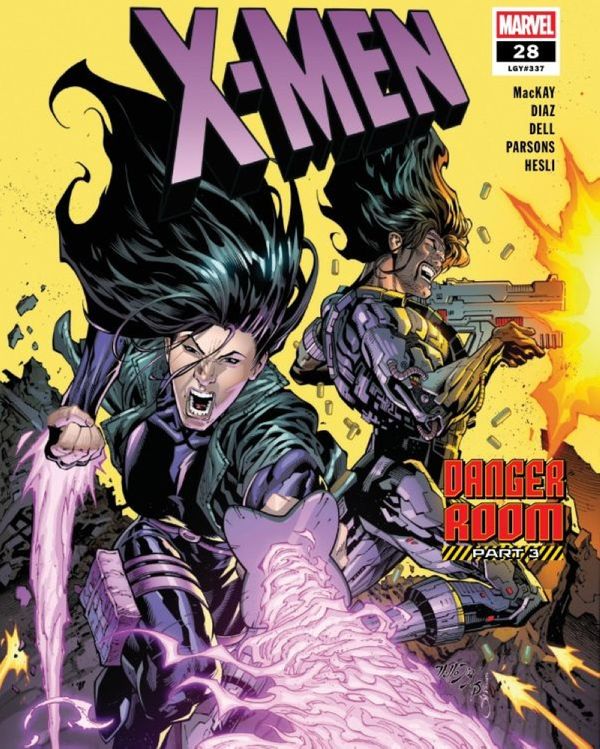
- Written by: Jed MacKay
- Art by: Netho Diaz, John Dell, Sean Parsons
- Colors by: Arthur Hesli
- Letters by: VC’s Clayton Cowles
- Cover art by: Netho Diaz, Sean Parson, Fer Sifuentes-Sujo
- Cover price: $4.99
- Release date: April 1, 2026
X-Men #28 (Marvel, 4/1/26): Writer Jed MacKay and artist Netho Diaz plunge Cyclops into a frantic survival thriller triggered by Glob Herman’s shooting. The kinetic execution entertains, but glaring logical gaps make it uneven. Verdict: Skip it.
First Impressions
You dive into the latest chapter of this Alaskan era, and the immediate sensation is a frustrating mix of high-octane momentum and structural fragility. The creative team pushes the throttle hard right out of the gate, plunging you straight into Xorn’s aerial desperation and Maxine Danger’s cold, calculating boardroom victories . It feels undeniably energetic on the page, with heavy shadows and dynamic framing selling the sheer peril of the Beyond Corporation’s trap . Yet, the moment you pause to look past the flashy execution, the foundational logic holding these set pieces together begins to crumble noticeably. You find yourself wondering how such seasoned tactical veterans are being so easily outmaneuvered by obvious distractions and unverified reports.
Recap
In X-Men #27, we learn that the chaos ripping through Cyclops’ squad and the town of Merle is not a random series of misfortunes, but a carefully curated trap engineered by Maxine Danger and her handpicked team of sociopaths. Operating out of their high-tech Danger Room, this twisted brain trust has systematically dismantled the mutants’ support structure by separating Psylocke from the main group and stoking anti-mutant resentment among the locals. Their most brutal move involved shooting Glob Herman to exploit the emotional vulnerabilities of the remaining team members, while luring the heavy hitters onto an infested, weaponized ship in the Gulf of Alaska. Now, a handful of non-powered planners have the X-Men dancing directly toward their graves, forcing Cyclops to rally his fractured people for a desperate fight to survive.
Plot Analysis (SPOILERS)
The issue opens violently in the airspace near Milwaukee, where Xorn finds himself caught in a tense aerial pursuit under heavy fire from unseen attackers . As the enemy locks onto their position, Xorn and his pilot brace for an imminent impact, desperately preparing to strike back against the overwhelming assault. Meanwhile, in the sterile, high-tech confines of the Danger Room, Maxine Danger receives a grim status update from her operatives regarding the situation with Psylocke. The agents confidently report that the Marauder has been taken down with absolutely no survivors, prompting a coldly triumphant Maxine to declare this their first successful bloodletting against the mutant heroes .
With one major threat supposedly eliminated, Maxine immediately pivots her focus to the developing crisis in Merle, Alaska, where community tensions are boiling over. Inside the old Sentinel factory, a furious Quentin Quire demands bloody retribution against the human townspeople after the senseless, brutal shooting of the harmless Glob Herman. Magneto firmly intervenes to calm the situation, forcing the hotheaded psychic to realize that targeting a non-combatant like Glob was a deliberate, calculated move designed purely to enrage them. As Magneto accurately deduces that the team is being goaded into a reckless public confrontation, he urges Quentin to look past the immediate triggerman and focus on finding the true mastermind pulling the strings.
Writing
Jed MacKay drives the narrative forward with a genuinely relentless pacing, but the structural integrity of the script suffers under the weight of glaring logical inconsistencies . The dialogue lands effectively, especially during the tense exchange between a hotheaded Quentin Quire and a coldly pragmatic Magneto, grounding the superhero chaos in recognizable character dynamics . However, the overarching plot relies heavily on forced convenience rather than organic, earned developments, leaving you questioning the basic intelligence of both the heroes and the villains. For example, why would a brilliantly paranoid mastermind like Maxine Danger accept the word of her operatives that their highly resilient targets are dead without demanding a single shred of physical evidence? It feels like the script deliberately dumbs down these experienced tacticians simply to maneuver the pieces into the required positions for the next big action sequence.
Art
Netho Diaz delivers highly kinetic layouts that keep your eyes moving smoothly across the page, anchoring the script’s frantic energy with solid, muscular figure work. The visual storytelling genuinely excels during the character-focused moments, where Diaz beautifully captures the raw, seething fury in Quentin Quire’s posture and the imposing, immovable authority of Magneto holding court from his chair. Arthur Hesli’s color palette complements this tension perfectly, leaning into moody, atmospheric shadows that make the sterile command center of the Danger Room feel authentically sinister and detached. The inks by John Dell and Sean Parsons provide a necessary, grounding heaviness to the environments, rooting the extraordinary mutant abilities in a gritty, tactile reality that feels genuinely dangerous .
Despite the strong foundational aesthetic, there are moments where the composition struggles to clearly communicate the exact geography of the escalating action sequences. The transition from the aerial dogfight over Milwaukee into the boardroom briefing feels slightly jarring, lacking a strong visual bridge to orient the reader before the heavy dialogue takes over. However, the artistic team masterfully handles the emotional weight of the Alaskan scenes, using tight, claustrophobic panel arrangements to perfectly mirror the mounting pressure closing in on the isolated mutants. Ultimately, the art team elevates the material significantly, providing a polished, dynamic veneer that almost successfully distracts you from the underlying structural gaps in the script.
Character Development
The core motivations of the cast remain recognizable, but their execution feels distinctly hollowed out to serve the immediate, rigid needs of the plot’s machinery. Magneto shines brilliantly as the voice of seasoned reason, properly identifying that the assault on Glob is a classic tactical provocation meant to strip them of their discipline. Conversely, Quentin Quire’s regression into thoughtless, reactionary violence feels a bit repetitive, though it accurately reflects the raw trauma of seeing a harmless friend brutalized. The most glaring inconsistency, however, lies in the sheer tactical passivity of the mutants; you really have to wonder why Quentin simply does not scan the minds of everyone in the town to instantly locate the attacker, or why heavy hitters like Juggernaut do not just charge through the flank of the ship to create a viable exit.
Originality & Concept Execution
The foundational premise of turning the classic Danger Room concept into a boardroom of human sociopaths treating mutant lives like a war game remains a genuinely fresh, compelling hook. It effectively strips away the usual cosmic or supernatural threats, replacing them with the cold, bureaucratic banality of corporate-sponsored terrorism, which feels highly relevant and grounded. Unfortunately, the execution fails to live up to the promise of that brilliant concept, bogging down a smart idea with deeply flawed, convenient execution that severely undermines the stated intelligence of the antagonists. When the supposed masterminds operate on unverified assumptions and the seasoned mutant survivors forget their most basic, overpowered skill sets, the book fundamentally fails to deliver on the high-stakes chess match it promised.
Pros and Cons
What We Loved
- Magneto’s dialogue resonates, positioning him perfectly as the seasoned tactical anchor against Quentin’s raw, unfocused emotional volatility.
- Netho Diaz’s kinetic panel compositions maintain a relentless forward momentum, maximizing the visual tension during the quieter boardroom sequences.
- Arthur Hesli’s moody color palettes establish a genuinely oppressive, claustrophobic atmosphere that beautifully highlights the team’s total isolation.
Room for Improvement
- The plot structure relies heavily on forced convenience, forcing highly capable characters to inexplicably ignore their own fundamental abilities.
- Telepathic investigation is entirely ignored; Quentin Quire inexplicably fails to utilize a simple mind scan to locate the shooter.
- Maxine Danger’s supposedly brilliant tactical mind accepts lethal operational success without requiring basic physical evidence, severely undermining her credibility.
About The Reviewer: Gabriel Hernandez is the Publisher & EIC of ComicalOpinions.com, a comics review site dedicated to indie, small, and mid-sized publishers.
Follow @ComicalOpinions on YouTube, Facebook, Instagram, and Twitter
The Scorecard
Writing Quality (Clarity & Pacing): 2/4
Art Quality (Execution & Synergy): 2.5/4
Value (Originality & Entertainment): 1/2
Final Verdict
X-Men #28 welcomes you back to another week of watching highly capable characters forget their own skill sets just to make the plot function. While you can certainly appreciate the moody, claustrophobic atmosphere and the kinetic, muscular panel compositions that keep the visual momentum moving briskly forward, the structural foundation holding it all together is deeply compromised. The script relies far too heavily on glaring logical conveniences, from brilliant masterminds accepting unverified kills to seasoned telepaths inexplicably refusing to use their most basic scanning abilities to solve a simple mystery. Ultimately, despite the strong aesthetic effort, this issue does not earn a place in your limited budget when there are far more logically consistent, tightly written superhero narratives available right now.
5.5/10
We hope you found this article interesting. Come back for more reviews, previews, and opinions on comics, and don’t forget to follow us on social media:
Connect With Us Here: Weird Science DC Comics / Weird Science Marvel Comics
If you’re interested in this creator’s works, remember to let your Local Comic Shop know to find more of their work for you. They would appreciate the call, and so would we.
Click here to find your Local Comic Shop: www.ComicShopLocator.com
As an Amazon Associate, we earn revenue from qualifying purchases to help fund this site. Links to Blu-Rays, DVDs, Books, Movies, and more contained in this article are affiliate links. Please consider purchasing if you find something interesting, and thank you for your support.
 Weird Science Marvel Comics