- Written by: Alex Paknadel
- Art by: Roge Antonio
- Colors by: Fer Sifuentes-Sujo
- Letters by: VC’s Joe Caramagna
- Cover art by: Federico Vicenti, Marcio Menyz (cover A)
- Cover price: $4.99
- Release date: February 11, 2026
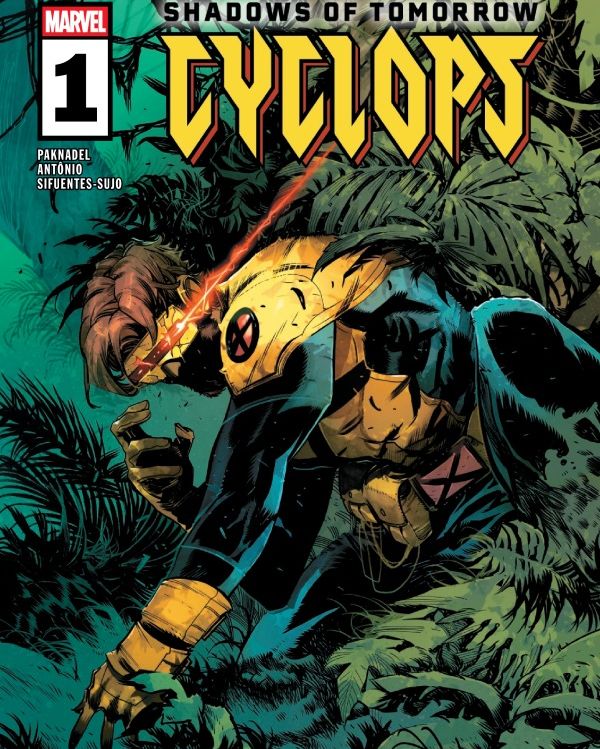
Cyclops #1, by Marvel on 2/11/26: Scott Summers loses his visor in a Quinjet crash while Donald Pierce’s new Reavers hunt a young mutant in a survival chase through the Canadian wilderness.
First Impressions
This debut issue left me cautiously intrigued but slightly underwhelmed. The core concept of stripping Cyclops of his signature control mechanism has real potential, and Pierce’s reimagined Reavers bring genuine menace. However, the execution feels disjointed, with too many narrative threads competing for attention in a standard-length issue, leaving the central survival premise underdeveloped.
Plot Analysis (SPOILERS)
The issue opens with Cyclops leading an X-Men raid on an A.I.M. facility in Bucharest, where scientists are using a device to alter mutant gene expression. Despite warning Kid Omega and Magik to wait for backup, they engage prematurely and nearly get killed. Cyclops saves them but delivers a harsh dressing-down afterward, insisting he needs “soldiers, not sorry.” Back at X-Men headquarters in Alaska, Beast questions Scott’s increasingly militant mindset, but Cyclops receives a mysterious message from Dr. Robyn Hanover, prompting him to borrow a Quinjet for a solo mission.
The narrative then shifts to Donald Pierce at an abandoned coal mine in British Columbia, where he monologues about his new generation of Reavers. Unlike the original mercenaries whose “flesh was fickle,” these new Reavers are young recruits he’s enhanced with cybernetics and indoctrinated with his philosophy that mutants are merely “resources” to be exploited. He brutally kills one wavering recruit named Philip and intimidates the others, including Tearjerker and Sockeye, into absolute loyalty. Meanwhile, Cyclops visits Dr. Hanover at the demolished Essex State Home for Foundlings in Nebraska, where she reveals disturbing gaps in his memory involving violent outbursts during his separation from his brother Alex as a child.
After leaving Nebraska, Scott calls Alex to discuss the revelations, but their conversation is cut short when his Quinjet enters mountainous terrain. The Reavers, who are tracking a fleeing young mutant girl through the Canadian wilderness, spot the Quinjet and Tearjerker impulsively shoots it down, believing it contains Avengers. The Quinjet crashes spectacularly, and Cyclops barely escapes the wreckage, his visor shattered. Without his protective lenses, he’s effectively blind and vulnerable. The issue ends with the young mutant stumbling upon the crashed Scott Summers, recognizing him as an X-Man while Pierce realizes the catastrophic mistake his Reavers have made.
Writing
Alex Paknadel’s script suffers from severe structural imbalance. The A.I.M. raid opening feels perfunctory, existing solely to establish Scott’s authoritarian streak rather than advancing any meaningful plot. The orphanage sequence with Dr. Hanover introduces intriguing psychological depth but arrives too late in the issue to resonate properly, and the revelations about Scott’s forgotten violence feel rushed and unearned. The pacing lurches between three disconnected narrative threads (Scott’s journey, Pierce’s recruitment, the fleeing mutant) without establishing clear connective tissue until the final pages. Dialogue oscillates between Pierce’s overwrought villainy (“the flesh was fickle”) and clunky exposition. The phone conversation between Scott and Alex exists purely to deliver backstory rather than feeling like genuine sibling interaction. The script’s strongest element is Pierce’s chilling philosophy reframing mutants as exploitable resources rather than existential threats, which distinguishes him from garden-variety bigots.
Art
Rogê Antônio’s artwork is competent but unremarkable. Action sequences lack kinetic energy, with static panel compositions that fail to convey motion or impact. The A.I.M. facility raid should crackle with urgency but instead feels staged and lifeless. Character acting is inconsistent, with facial expressions occasionally failing to match the emotional beats of scenes. The orphanage sequence benefits from tighter framing that emphasizes Scott’s discomfort, but the Quinjet crash, which should be the issue’s visual centerpiece, is disappointingly understated. Fer Sifuentes-Sujo’s colors are serviceable but lack atmospheric distinction between locations, Romania, Alaska, Nebraska, and British Columbia all share similar palettes. The climactic red sky effect when Scott’s powers explode uncontrolled is visually striking but arrives too late to salvage the issue’s overall visual mediocrity.
Character Development
Scott’s characterization veers uncomfortably between “hardened military commander” and “trauma survivor confronting repressed memories” without successfully integrating these facets. His harsh treatment of Kid Omega and Magik feels performatively authoritarian rather than organically developed from established character traits. The orphanage revelations could deepen our understanding of Scott’s control obsession, but they’re introduced with insufficient context and abandoned too quickly. Alex’s frustration with Scott’s protective instincts rings true but lacks space to breathe. Donald Pierce emerges as the issue’s most coherent character, his cold pragmatism and manipulative charisma making him a genuinely threatening presence. The young Reavers (Tearjerker, Sockeye, Blitz Tempo, Endzone) are thinly sketched archetypes, their youth and desperation mentioned but not explored. The fleeing mutant girl remains a complete cipher, existing solely as a MacGuffin to drive the plot forward.
Originality & Concept Execution
The core premise of Cyclops stripped of his visor and forced into a survival scenario has inherent dramatic potential, but the issue squanders most of its page count on setup rather than delivering that promised scenario. The updated Reavers concept, reimagining them as indoctrinated child soldiers rather than generic mercenaries, brings disturbing real-world resonance and distinguishes this take from previous iterations. However, the execution feels half-committed, with Pierce’s philosophy articulated in monologue rather than demonstrated through action. The memory-gap subplot introducing Scott’s forgotten childhood violence could add psychological complexity but arrives too abruptly and remains disconnected from the survival plot. By the time the issue reaches its cliffhanger, very little of the advertised “Cyclops hunted by Reavers while virtually blind” premise has actually occurred, making this feel like an overextended prologue rather than a complete first chapter.
Positives
Donald Pierce’s reimagining as a cold ideologue who views mutants as exploitable resources rather than existential threats brings genuine menace and ideological depth rarely seen in X-Men villains. His brutal execution of the wavering Reaver Philip establishes stakes and demonstrates his willingness to enforce absolute loyalty through violence, making him feel like a credible threat. The orphanage sequence, despite its rushed execution, introduces genuinely unsettling questions about Scott’s repressed childhood trauma and the violent episodes he’s forgotten, creating intriguing psychological groundwork for future exploration. The central survival premise, though barely initiated in this issue, has strong potential to force Scott into vulnerability and test his legendary control in ways few X-Men stories attempt.
Negatives
The structural imbalance cripples the issue’s momentum, with too much page count devoted to disconnected setup and insufficient space for the advertised central conflict. By the time Cyclops crashes and loses his visor, the issue is essentially over, meaning the entire survival premise exists only as a promise for future issues rather than a delivered experience. The art fails to elevate the script’s weaknesses, with action sequences lacking dynamism and the Quinjet crash, which should be a spectacular visual setpiece, rendered with disappointing understatement. Character work beyond Pierce is superficial, with the young Reavers indistinguishable from each other and the fleeing mutant girl given zero personality or motivation. The A.I.M. opening sequence feels like filler from a different story entirely, wasting precious pages on a raid that contributes nothing to the issue’s central narrative or themes.
About The Reviewer: Gabriel Hernandez is the Publisher & EIC of ComicalOpinions.com, a comics review site dedicated to indie, small, and mid-sized publishers.Follow @ComicalOpinions on YouTube, Facebook, Instagram, and Twitter
The Scorecard
Writing Quality (Clarity & Pacing): [1.5/4]
Art Quality (Execution & Synergy): [2/4]
Value (Originality & Entertainment): [1.5/2]
Final Verdict
Cyclops #1 commits the cardinal sin of first issues by spending twenty pages setting up a premise it barely begins to deliver. The survival thriller advertised on the cover and teased in promotional materials exists almost entirely in potential rather than execution, with the actual “Cyclops hunted while blind” scenario occupying perhaps three pages of a standard-length comic. The concept has legs, the execution of this debut chapter is fatally unfocused, front-loading exposition when it should be delivering tension and excitement.
5/10
We hope you found this article interesting. Come back for more reviews, previews, and opinions on comics, and don’t forget to follow us on social media:
Connect With Us Here: Weird Science DC Comics / Weird Science Marvel Comics
If you’re interested in this creator’s works, remember to let your Local Comic Shop know to find more of their work for you. They would appreciate the call, and so would we.
Click here to find your Local Comic Shop: www.ComicShopLocator.com
As an Amazon Associate, we earn revenue from qualifying purchases to help fund this site. Links to Blu-Rays, DVDs, Books, Movies, and more contained in this article are affiliate links. Please consider purchasing if you find something interesting, and thank you for your support.
 Weird Science Marvel Comics