- Written by: Jeph Loeb
- Art by: Simone Di Meo
- Colors by: Simone Di Meo
- Letters by: Richard Starkings
- Cover art by: Simone Di Meo (cover A)
- Cover price: $4.99
- Release date: January 21, 2026
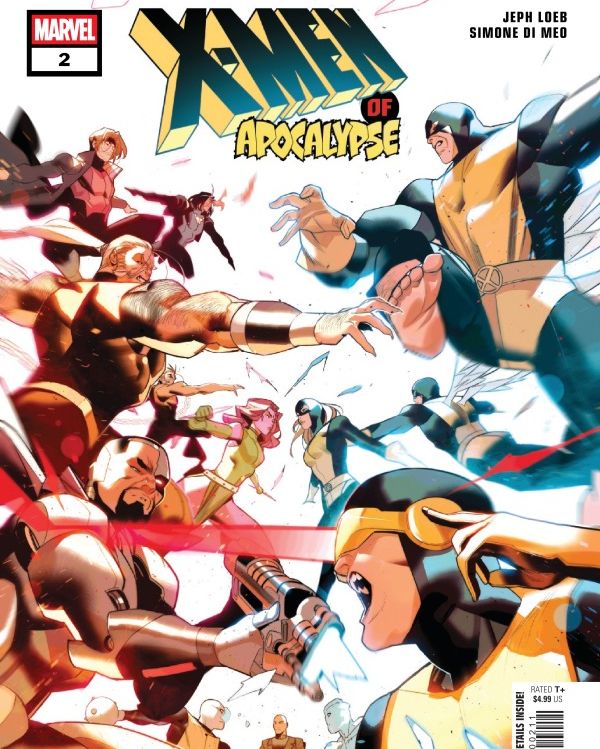
X-Men of Apocalypse #2, by Marvel on 1/21/26, finds our timeline-hopping mutants crashing an intimate moment in Xavier’s School and discovering that disrupting history comes with complications nobody predicted.
First Impressions
The opening pages thrust you straight into an uneasy collision between a peaceful classroom moment and a chaotic intrusion that feels immediate and disorienting in the best way. The visual language carries you through the confusion faster than the dialogue can explain it, which works well because the characters themselves are equally lost. It’s a solid hook that promises answers, even if it’s unclear whether the comic will actually deliver them.
Recap
In X-Men of Apocalypse #1 (published way back in November 2025) introduced Nate Grey, a young X-Man from an alternate timeline, face-to-face with the X-Men of Apocalypse, a war-hardened team from a devastated universe where Xavier died and Apocalypse conquered Earth. After a messy misunderstanding brawl, both teams realized they shared a goal: locate Charles Xavier to correct fractured timelines. The issue prioritized set-up over resolution, closing at Xavier’s School with vague stakes and leaving all emotional payoff postponed for this issue. The first installment leaned on exposition and melodrama while undermining any sense of urgency, positioning everything as table-setting for future drama rather than delivering a complete story arc.
Plot Analysis
The issue opens at Xavier’s School for Gifted Youngsters in an alternate timeline’s earlier era, where young versions of the X-Men are still learning their abilities. Professor Xavier senses Jean Grey approaching in a taxi, commenting on her potential and how her arrival marks an important moment for the team. Angel jokes about Jean being a “living doll” while waiting to greet her, but the arrival quickly turns chaotic when something goes wrong and Nate Grey ends up incapacitated on the floor. The young X-Men and the Age of Apocalypse X-Men clash violently, with the timeline visitors trying to explain their purpose while the young team defends their professor and the school.
During the battle, Beast makes a quip about fighting “beasts,” Gambit uses his charm and wit, and Jean Grey demonstrates powerful psychic abilities that prompt Xavier to defend his students fiercely. Morph attempts levity in the middle of combat while Iceman complains about being frozen, and Sabretooth launches aggressive insults at Cyclops, claiming he’ll betray them all in the future. The young X-Men are unprepared for this level of combat, but they hold their own through teamwork and determination. The battle drags on without clear resolution, with each side gaining and losing ground in a series of visually dynamic exchanges that feel more like training exercises than genuine conflict.
After the physical confrontation becomes chaotic and unresolved, the Age of Apocalypse mutant team attempts a different approach. Nate telepathically connect with Jean Grey in the astral plane, where he encounters Phoenix, an entity of incredible power residing within her psyche. Phoenix warns that Nate and his team seek shards of the M’Kraan Crystal to alter reality and that succeeding in this task will create a paradox that could unleash Phoenix herself into their timeline. Phoenix cryptically offers assistance while emphasizing the danger of what Nate is attempting, revealing knowledge of his genetic connection to Jean Grey as her son in some timeline.
After this confrontation, Phoenix separates the Age of Apocalypse team using chronometers so they travel to different time periods and locations, each seeking shards of the M’Kraan Crystal. Gambit is transported to the Savage Land in a different era, where he encounters Rogue, but this version of Rogue is with to Magneto, presenting a nightmare scenario for Gambit. The issue ends on this cliffhanger, leaving Gambit facing his worst emotional situation while the broader team remains scattered across time and space.
Writing
Loeb keeps the momentum brisk by throwing readers directly into action and confusion rather than starting with exposition, which is smarter than the previous issue’s approach. The problem is that the battle sequence stretches across most of the comic without developing clear objectives or emotional stakes for anyone involved. Dialogue works fine for basic character beats, especially Gambit’s charm and Beast’s humor, but it doesn’t advance the narrative arc meaningfully. The structure pivots abruptly from physical combat to astral plane psychic drama without transition, and while the Phoenix reveal adds conceptual weight, it arrives so suddenly that it reads more like plot convenience than earned storytelling. The ending separation of the team feels inevitable but undercuts any sense of team cohesion that the previous issue was supposedly building toward.
Art
Simone Di Meo continues delivering dynamic action sequences with bold compositions that make even routine punches and blocks feel kinetic and urgent. The paneling during combat flows well enough to follow the chaos without losing track of which character is where. The astral plane sequence uses different visual language with heavier shadows and more ethereal linework, successfully distinguishing it from the school battle. Color choices remain vivid and energetic, though the neon palette occasionally flattens emotional moments that should carry weight. The Phoenix revelation uses more detailed artwork to emphasize her power and danger, which creates a visual contrast that works effectively for highlighting how outmatched Nate actually is.
Character Development
This is where the issue struggles most visibly. The young X-Men function as background combatants defending their school without developing personality beyond their powers and quirks. Professor Xavier shows tactical awareness and paternal concern, but we learn nothing new about his beliefs or stakes. Jean Grey is pulled into significance through her psychic potential rather than through her own choices or growth. Nate Grey gets physically overpowered and then telepathically confronted, leaving him feeling reactive rather than decisive. The Age of Apocalypse team remains largely interchangeable fighters until Gambit’s final moment reveals genuine emotional vulnerability through the Rogue encounter. Relatability suffers because most characters are either silent combatants or delivering exposition rather than expressing wants and fears that readers can connect to.
Originality & Concept Execution
The M’Kraan Crystal hunt concept isn’t original in the X-Men universe, but separating the team across timelines and having them discover consequences like Phoenix’s potential awakening adds actual stakes to the multiverse hopping that the first issue only teased. Phoenix’s appearance suggests the creative team understands that this story needs a threat bigger than simple timeline correction. However, the execution relies heavily on familiar beats: misunderstandings leading to fights, telepathic communication revealing hidden knowledge, and team separation for upcoming payoffs. The Gambit and Rogue twist in the Savage Land is the most intriguing element because it combines emotional resonance with high-concept storytelling, but it arrives too late to reshape how you feel about the rest of the issue.
Positives
The Phoenix reveal lands with genuine weight and transforms vague timeline threats into something concrete and dangerous. Di Meo’s artwork maintains crisp, clear action sequences throughout, and the visual language shift between the school battle and the astral plane demonstrates technical skill. The decision to separate the team spatially and temporally creates genuine intrigue about what happens next, and the Gambit and Rogue twist in the Savage Land is emotionally compelling because it presents a scenario where heroic intention produces personal heartbreak. If you appreciate conceptual ambition in your superhero storytelling, the idea of spreading your team across time to hunt cosmic shards while accidentally unleashing Phoenix is solid science fiction.
Negatives
The battle at Xavier’s School drags on without meaningful character development or changing dynamics, which makes it feel padded despite being visually competent. Dialogue veers between functional exposition and forgettable one-liners without giving supporting characters distinct voices or memorable lines. The transition from physical combat to astral plane psychic drama feels abrupt and unmotivated narratively, happening simply because the plot requires Jean Grey to be involved. Supporting characters like Beast and the young X-Men are functional plot devices rather than people with stakes in this situation. The issue wastes the potential of having early-era Xavier and modern-era Apocalypse survivors in the same room by treating them as interchangeable combatants rather than exploring ideological or philosophical conflict about timelines and the cost of correcting history.
About The Reviewer: Gabriel Hernandez is the Publisher & EIC of ComicalOpinions.com, a comics review site dedicated to indie, small, and mid-sized publishers.Follow @ComicalOpinions on YouTube, Facebook, Instagram, and Twitter
The Scorecard
Writing Quality (Clarity & Pacing): [2/4]
Art Quality (Execution & Synergy): [3/4]
Value (Originality & Entertainment): [1/2]
Final Verdict
X-Men of Apocalypse #2 improves on its predecessor by making timeline consequences tangible and adding genuine threat through Phoenix’s involvement, but it squanders that goodwill by spending half the issue on a forgettable school battle and remaining reluctant to commit to emotional character moments. The Gambit and Rogue cliffhanger proves the creative team can land compelling drama, so why does everything leading up to it feel like going through the motions?
6/10
We hope you found this article interesting. Come back for more reviews, previews, and opinions on comics, and don’t forget to follow us on social media:
Connect With Us Here: Weird Science DC Comics / Weird Science Marvel Comics
If you’re interested in this creator’s works, remember to let your Local Comic Shop know to find more of their work for you. They would appreciate the call, and so would we.
Click here to find your Local Comic Shop: www.ComicShopLocator.com
As an Amazon Associate, we earn revenue from qualifying purchases to help fund this site. Links to Blu-Rays, DVDs, Books, Movies, and more contained in this article are affiliate links. Please consider purchasing if you find something interesting, and thank you for your support.
 Weird Science Marvel Comics